

What Are the Causes of Urinary Tract Infection in Women?

Urinary tract infections are one of the most common bacterial infections affecting women, and understanding what causes them is the first step toward preventing them from happening repeatedly. A UTI occurs when bacteria enter the urinary tract and begin multiplying in the bladder, urethra, or in more serious cases, the kidneys. While anyone can develop a UTI, women are significantly more vulnerable than men due to anatomical differences that make bacterial entry easier and more frequent throughout their lives.
Knowing the primary causes and risk factors helps women make informed decisions about hygiene, lifestyle, and when to seek medical care before a simple bladder infection progresses into something far more serious. This guide covers why women are more susceptible, what most commonly triggers a UTI, the symptoms to watch for, and when to seek urgent care near me 24 hours for prompt evaluation and treatment at the right time.
What Is a Urinary Tract Infection?
A urinary tract infection is a bacterial infection that can occur anywhere along the urinary system, most commonly in the bladder and urethra. The most frequent form is a bladder infection, also known as cystitis, which is uncomfortable but highly manageable when treated early. When bacteria travel upward into the kidneys, the infection becomes significantly more serious and requires urgent medical attention to prevent permanent organ damage.
Why Are Women More Prone to UTIs Than Men?
The primary reason women develop UTIs more often than men comes down to anatomy. A woman's urethra is shorter, allowing bacteria to reach the bladder more easily. The urethral opening is also located closer to the vagina and rectum, where bacteria naturally exist, increasing the risk of infection.
The National Institute of Diabetes and Digestive and Kidney Diseases (NIDDK) confirms that these anatomical differences contribute to a higher risk of UTIs in women. This anatomical reality explains why many women experience UTIs during their lifetime and why some develop recurring infections.
What Are the Most Common Causes of UTIs in Women?
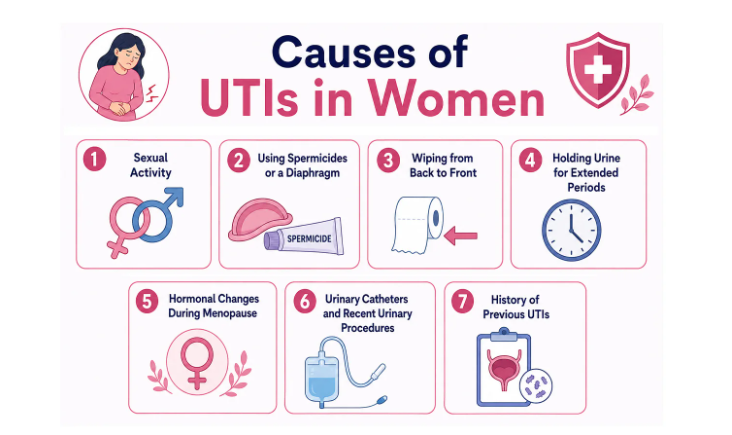
Most UTIs are caused by Escherichia coli, commonly known as E. coli, a bacterium naturally present in the digestive tract that migrates easily to the urethral opening. Several specific factors trigger this bacterial transfer in women.
- Sexual activity is one of the most common triggers, as intercourse can push bacteria from the vaginal area directly into the urethra, which is why UTIs frequently develop within 24 to 48 hours of sexual contact
- Using spermicides or a diaphragm for contraception disrupts the natural bacterial balance of the vaginal environment and increases the likelihood of harmful bacteria reaching the urethral opening
- Wiping from back to front after using the toilet transfers bacteria from the rectal area toward the urethra, making proper hygiene one of the most straightforward preventive measures available to women
- Holding urine for extended periods allows bacteria already present in the bladder to multiply to levels that trigger a full infection rather than being naturally flushed out through regular urination
- Hormonal changes during menopause reduce estrogen levels, which thin the urethral and vaginal lining and significantly decrease the body's natural ability to resist bacterial colonization in the urinary tract
- Urinary catheters and recent urinary procedures introduce bacteria directly into the urinary tract and are a common cause of hospital-acquired UTIs in women across all age groups
- A history of previous UTIs is itself a risk factor, as recurring infections can indicate that certain bacteria have developed resistance or that an underlying anatomical issue is contributing to ongoing susceptibility
What Are the Symptoms of a UTI in Women?
Recognizing a UTI early gives you the best chance of treating it before it spreads beyond the bladder. Symptoms typically come on quickly and are difficult to ignore once they begin.
- A persistent and strong urge to urinate, even immediately after emptying the bladder
- A burning or stinging sensation during urination that ranges from mild discomfort to significant pain
- Passing small amounts of urine frequently despite feeling a constant and urgent need to go
- Urine that appears cloudy, dark, or unusually strong in odor compared to normal
- Pelvic pressure or a dull aching sensation in the lower abdomen around the bladder area
- Blood in the urine, appearing pink, red, or slightly brown, should always prompt medical evaluation
If fever, chills, nausea, or pain in the upper back and sides accompany these symptoms, the infection may have reached the kidneys and requires immediate emergency care rather than a routine appointment. Memorial Springs ER provides prompt evaluation with an average ER wait time of under 12 minutes for patients needing urgent attention.
Who Is Most at Risk for Recurrent UTIs?
Some women experience occasional UTIs while others deal with them repeatedly throughout the year. Certain factors significantly increase the likelihood of developing frequent infections.
- Sexually active women, particularly those with new or multiple partners, face a consistently higher risk of bacterial transfer leading to recurring infections
- Postmenopausal women experience declining estrogen levels that thin urinary tract tissues and reduce natural bacterial resistance, making recurrent infections far more common after menopause
- Women with diabetes have elevated glucose levels in the urine that create a favorable environment for bacterial growth and immune changes that make fighting infections more difficult
- Pregnant women are more susceptible due to hormonal and physical changes that affect bladder emptying and allow bacteria to travel more easily through the urinary tract
- Women with structural abnormalities in the urinary tract or a history of kidney stones face a higher baseline risk of repeated infections throughout their lifetime
For more on separating UTI fact from fiction, our blog on4 UTI myths debunked clears up common misconceptions that lead many women to delay treatment longer than they should.
How to Prevent UTIs in Women?
Many UTIs are preventable with consistent daily habits that reduce bacterial entry and support overall urinary health throughout the year.
- Drink plenty of water daily to flush bacteria from the urinary tract before they have the opportunity to multiply and cause a full infection
- Always wipe front to back after using the toilet to keep bacteria from the rectal area away from the urethra
- Urinate before and after sexual activity to flush out any bacteria introduced into the urethra during intercourse
- Avoid scented feminine products, douches, and spermicides that disrupt the natural vaginal bacterial balance and increase UTI risk
- Wear breathable cotton underwear and avoid tight clothing that traps moisture and creates a favorable environment for bacterial growth
When to Go to the ER?
Many UTIs can be addressed through a primary care visit, but certain symptoms indicate a more serious infection requiring immediate emergency evaluation. Visit Memorial Springs ER right away if you are experiencing any of the following.
- Fever above 101 degrees Fahrenheit, alongside urinary symptoms, which may signal the infection has reached the kidneys
- Severe pain in the upper back, side, or flank area accompanied by nausea, vomiting, or chills suggests a kidney infection
- Significant or persistent blood in the urine, rather than a faint pink tinge, during an otherwise mild infection
- Symptoms that are rapidly worsening or not improving after beginning a course of antibiotics
- UTI symptoms during pregnancy, which carry a higher risk of complications and always require prompt evaluation
- Complete inability to urinate despite a strong and persistent urge, which may indicate a blockage requiring immediate assessment
Ouron-site lab services allow us to run urine cultures and confirm your diagnosis immediately without sending you anywhere else.
UTI Care at Memorial Springs ER
When a UTI is causing significant pain, fever, or symptoms that suggest the infection has spread to the kidneys, Memorial Springs ER in Spring, Texas, is here around the clock with no wait times and board-certified physicians ready to see you immediately. We provide on-site urine testing, lab services, and complete diagnostic support to confirm your diagnosis and start the right treatment fast. Do not wait for a UTI to progress into a kidney infection. Visit Memorial Springs ER today.
Related Emergency Services
Urgent Care Services
Prompt treatment for non-life-threatening illnesses and minor injuries with zero waiting time.
Lab Services
On-site full-service laboratory providing rapid blood panels, toxicologies, infection testing, and comprehensive lab diagnostic services.
Pregnancy Complications
Urgent emergency evaluation and stabilization for acute pregnancy emergencies and obstetric emergencies.
Related Articles
Trusted Health Resources
The medical information in this article is informed by guidelines from these authoritative organizations:
Medical Disclaimer
The information provided on this blog is for general informational and educational purposes only. It is not a substitute for professional medical advice, diagnosis, or treatment. Always seek the advice of a qualified healthcare provider regarding any medical condition. If you are experiencing a life-threatening medical emergency, call 911 or proceed immediately to the nearest emergency room.