

How Long Can Acid Reflux Last?

If you’re dealing with a burning feeling in your chest, sour taste, or discomfort after eating, it can be frustrating not knowing when it will finally go away. Occasional acid reflux may last a few minutes to several hours, depending on the trigger and how quickly your symptoms settle.
But if you’re wondering how long can acid reflux last because symptoms keep returning, last for days, or are becoming more severe, it may be a sign of GERD and should not be ignored. Severe or persistent chest pain, trouble breathing, dizziness, sweating, or pain spreading to the arm, jaw, neck, or back requires urgent medical evaluation. For prompt care, visit urgent care.
What Is Acid Reflux?
Acid reflux occurs when stomach contents, including acidic digestive juices, flow backward into the esophagus, causing irritation and symptoms such as heartburn, sour taste, regurgitation, chest discomfort, nausea, or throat irritation. It commonly happens when the lower esophageal sphincter relaxes or becomes weakened.
Occasional reflux is common, but frequent or persistent symptoms may indicate GERD. A systematic review and meta-analysis of 102 studies found that 13.98% of people globally had GERD, showing how common persistent reflux can be.
Dangerous Acid Reflux Symptoms
- Severe or persistent chest pain.
- Difficulty or pain when swallowing.
- Persistent vomiting.
- Vomiting blood.
- Black, tarry stools.
- Unexplained weight loss.
- Loss of appetite.
- Chronic cough or hoarseness.
What Causes Acid Reflux to Last Longer?
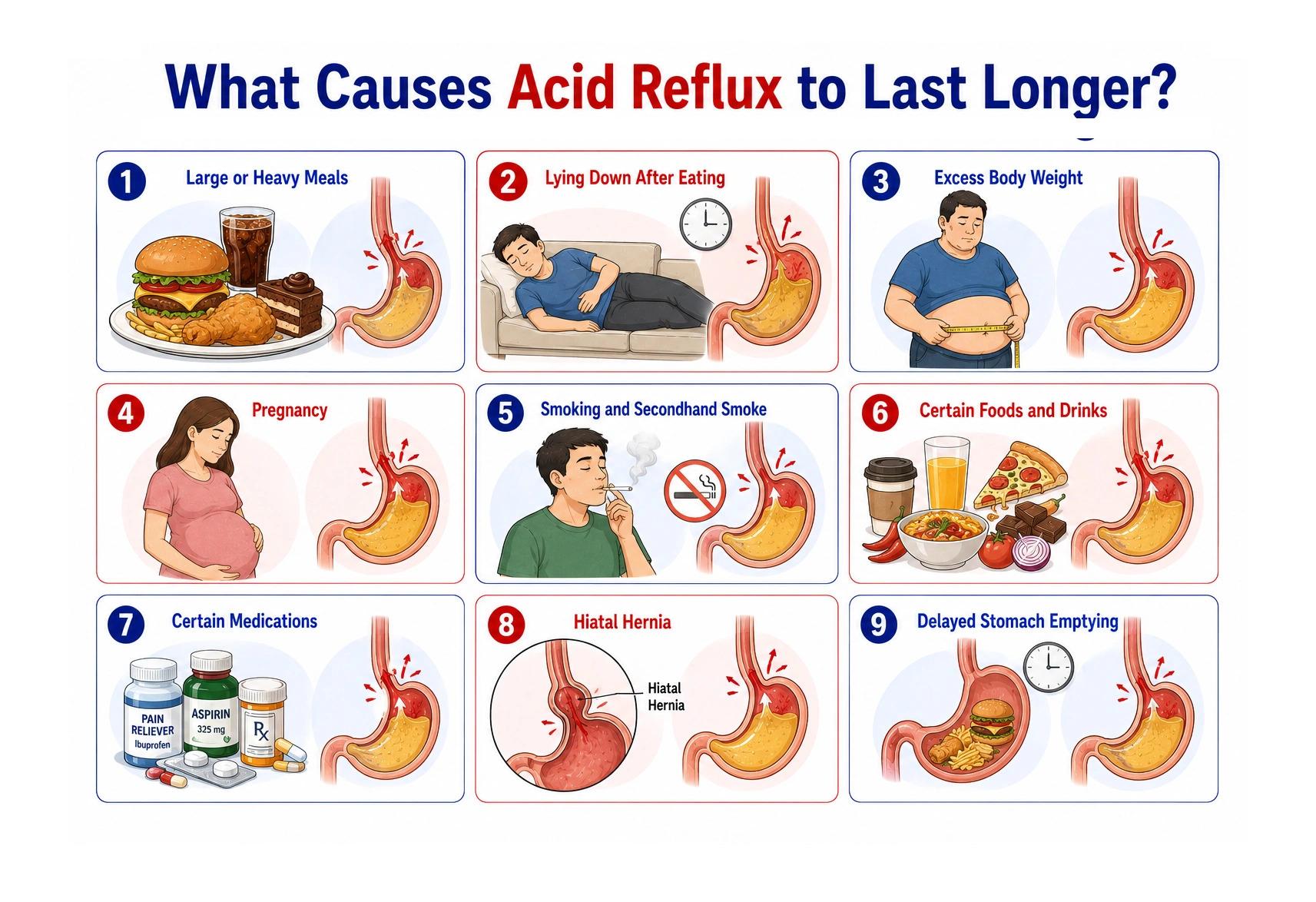
It can be frustrating when acid reflux does not settle as quickly as expected, especially when burning, regurgitation, or throat discomfort starts interfering with meals, sleep, or daily activities. The duration of symptoms can vary from person to person, and repeated reflux often means that something is continuing to promote irritation or allow stomach contents to move upward.
Large or Heavy Meals
Eating a large meal can increase pressure inside the stomach and make reflux more likely, particularly if you lie down soon afterward. Larger portions may also leave the stomach fuller for longer, allowing reflux symptoms to persist. Eating smaller meals and avoiding lying down for 2 to 3 hours after eating may help reduce symptoms.
Lying Down After Eating
Reflux can become more noticeable when you lie down soon after a meal because gravity is no longer helping keep stomach contents down. This can contribute to nighttime heartburn, regurgitation, coughing, or a sour taste in the mouth. Leaving several hours between your last meal and bedtime may reduce nighttime symptoms.
Excess Body Weight
Being overweight or having obesity can increase pressure on the abdomen and contribute to reflux. This can make acid reflux symptoms occur more frequently or last longer in some people. If appropriate, gradual weight loss may reduce reflux symptoms and is commonly included in GERD management.
Pregnancy
Pregnancy can make acid reflux more common because hormonal changes can affect the lower esophageal sphincter, while the growing uterus can increase pressure on the stomach. Symptoms may become particularly noticeable later in pregnancy. Your healthcare professional can recommend pregnancy-safe ways to manage persistent heartburn.
Smoking and Secondhand Smoke
Smoking can affect the function of the lower esophageal sphincter and is associated with GERD. Regular exposure to secondhand smoke may also contribute to reflux problems. Avoiding tobacco exposure can be an important part of reducing recurring symptoms.
Certain Foods and Drinks
Some foods and beverages can trigger or worsen reflux symptoms in certain people. Instead of eliminating large numbers of foods unnecessarily, pay attention to your personal triggers and limit those that repeatedly cause heartburn or regurgitation. Individual responses vary, so a food that bothers one person may not affect another.
Certain Medications
Some medicines can contribute to reflux or make existing symptoms worse. This can include certain medications that affect the lower esophageal sphincter or irritate the digestive tract. Do not stop a prescribed medication on your own; ask your doctor whether an alternative or adjustment may be appropriate.
Hiatal Hernia
A hiatal hernia occurs when part of the stomach moves upward through an opening in the diaphragm. It can interfere with the normal barrier that helps prevent stomach contents from moving into the esophagus, contributing to recurring reflux symptoms. Persistent or difficult-to-control symptoms may require medical evaluation.
Delayed Stomach Emptying
When the stomach takes longer than usual to empty its contents, increased stomach fullness and pressure may make reflux more likely. Symptoms can include prolonged fullness, nausea, bloating, and repeated regurgitation. If these symptoms occur frequently alongside reflux, a healthcare professional can evaluate the underlying cause.
How Long Does GERD Last?
Unlike occasional acid reflux, which may occur after a particular meal or trigger and then settle, GERD is a chronic condition in which reflux repeatedly causes symptoms or complications over time. GERD symptoms can improve with appropriate treatment but may return when treatment is stopped or triggers continue.
Because GERD can repeatedly expose the esophagus to stomach contents, untreated disease may interfere with eating, sleeping, work, and everyday activities. Over time, persistent reflux can contribute to esophagitis, ulcers, esophageal narrowing, and Barrett's esophagus, making ongoing symptoms worth discussing with a healthcare professional.
How Is Persistent Acid Reflux Diagnosed?
When heartburn or regurgitation keeps coming back, getting an accurate evaluation can provide reassurance and help determine whether the symptoms are actually caused by GERD or another condition. Testing is not always necessary initially, but it may be recommended when symptoms do not improve, complications are suspected, or another condition needs to be ruled out.
- Medical History and Symptom Review: Your doctor will ask about heartburn, regurgitation, chest discomfort, swallowing problems, nighttime symptoms, medications, diet, and how frequently symptoms occur.
- Upper GI Endoscopy: A flexible camera is used to examine the esophagus and stomach for inflammation, ulcers, narrowing, or other abnormalities. A small tissue sample may be taken for laboratory examination when needed.
- Esophageal pH Monitoring: This test measures acid exposure in the esophagus and can help confirm whether symptoms are associated with acid reflux. It is considered the most accurate way to detect acid in the esophagus.
- Additional Testing: Depending on your symptoms, doctors may recommend other testing to investigate swallowing problems, complications, or conditions that can mimic GERD.
When to Go to the ER
Although heartburn is common, new, severe, or unexplained chest pain should never be assumed to be acid reflux because heart problems can cause similar symptoms. Emergency evaluation is especially important when chest discomfort occurs with breathing difficulty, sweating, dizziness, fainting, or pain that spreads beyond the chest.
- Chest pressure or squeezing that does not go away.
- Chest pain with shortness of breath.
- Pain spreads to the arm, jaw, neck, or back.
- Fainting or severe dizziness.
- Cold sweating with chest discomfort.
- Vomiting blood or passing black stools.
- Severe difficulty swallowing.
When you’re worried about your symptoms, knowing that our ER wait time is under 12 minutes can make it a little easier to seek the urgent evaluation you need without putting it off.
How Is Chronic Acid Reflux Treated?
Treatment for chronic acid reflux focuses on reducing symptoms, limiting acid exposure, and protecting the esophagus from ongoing irritation. Depending on the severity and frequency of symptoms, your healthcare professional may recommend lifestyle changes, over-the-counter medicines, prescription treatment, or procedures.
- Antacids: Most doctors recommend antacids for occasional heartburn because they provide quick relief by neutralizing stomach acid.
- H2 Blockers: Most doctors recommend H2 blockers to reduce stomach acid and relieve reflux symptoms.
- Proton Pump Inhibitors (PPIs): Most doctors recommend PPIs for GERD because they reduce acid and help heal the esophagus.
- Smaller Meals: Eating smaller portions can reduce stomach pressure and help prevent reflux.
- Avoid Lying Down After Meals: Most doctors recommend waiting 2 to 3 hours after eating before lying down.
- Elevate During Sleep: Raising the head of the bed 6 to 8 inches may help reduce nighttime reflux.
- Weight Management: Gradual weight loss may reduce stomach pressure and improve GERD symptoms.
- Quit Smoking: Stopping smoking may help reduce reflux and support overall health.
- Fundoplication: Doctors may recommend this surgery for selected patients with persistent GERD despite other treatments.
- Endoscopic Procedures: Certain procedures can improve the barrier that prevents stomach contents from flowing back into the esophagus.
Acid Reflux Care at Memorial Springs ER
When acid reflux causes severe or persistent chest pain, difficulty breathing, vomiting blood, black stools, or severe difficulty swallowing, Memorial Springs ER in Spring, Texas, is available 24/7 for emergency evaluation and care. Our emergency team can assess concerning symptoms, rule out serious conditions, and provide appropriate treatment based on your condition. If your symptoms become severe or you are unsure whether your chest pain is caused by acid reflux or something more serious, do not wait for them to worsen. Visit Memorial Springs ER for prompt emergency medical attention.
Key Takeaways
- Occasional acid reflux can last a few minutes to several hours, while recurring symptoms may indicate GERD.
- Frequent heartburn, regurgitation, chest discomfort, or throat irritation should be evaluated if they keep returning.
- Large meals, lying down after eating, certain medications, pregnancy, smoking, and other factors can worsen or prolong reflux.
- Persistent GERD can affect daily life and may damage the esophagus if left untreated.
- Severe chest pain, breathing difficulty, vomiting blood, black stools, or severe swallowing problems require urgent medical attention.
Frequently Asked Questions
Can You Die From Acid Reflux In Your Sleep?
Acid reflux itself is rarely life-threatening, but severe nighttime reflux can cause choking or breathing problems. Seek emergency care for severe chest pain, difficulty breathing, or fainting.
What Does Acid Reflux Feel Like?
Acid reflux commonly feels like a burning sensation in the chest, often behind the breastbone. You may also experience a sour taste, regurgitation, throat irritation, bloating, or nausea.
What to Drink for Acid Reflux?
Water is generally a good choice when you have acid reflux. Some people also tolerate non-citrus, non-caffeinated drinks well, while coffee, alcohol, carbonated drinks, and acidic beverages may worsen symptoms.