
How to Get Rid of Diarrhea
Diarrhea is one of those conditions that can completely derail your day, striking suddenly and leaving you searching for fast relief. Whether it came from something you ate, a stomach bug, or stress, the good news is that most cases resolve on their own within 24 to 48 hours with the right approach at home. The key is knowing exactly what helps speed up recovery, what foods and drinks to avoid, and which symptoms signal that home care is no longer enough.
Diarrhea itself is not usually dangerous, but the dehydration it can cause absolutely is, especially in young children, older adults, and anyone with an underlying health condition. Knowing how to manage symptoms effectively and recognizing when to seek urgent care can make the difference between a rough day and a serious complication.
Why Does Diarrhea Happen?
Diarrhea happens when the digestive system moves food and fluid through the intestines too quickly, preventing the colon from properly absorbing water, which results in loose, watery stools. This rapid movement is typically triggered by an infection, irritation, or inflammation in the digestive tract that disrupts the normal absorption process.
What Causes Diarrhea?
Diarrhea has a wide range of possible causes, and identifying the likely trigger can help guide the most effective treatment approach.
- Viral infections: Norovirus and rotavirus are among the most common causes of sudden diarrhea, spreading easily through contaminated surfaces and close contact
- Bacterial infections: Salmonella, E. coli, and Campylobacter are frequently linked to contaminated food or water and often cause more severe symptoms than viral causes
- Food poisoning: Consuming contaminated or improperly stored food can trigger sudden and intense diarrhea, often within hours of eating
- Food intolerances: Lactose intolerance and other food sensitivities can cause diarrhea shortly after consuming trigger foods
- Medications: Antibiotics and certain other medications commonly list diarrhea as a side effect due to their impact on gut bacteria
- Chronic digestive conditions: Irritable bowel syndrome, inflammatory bowel disease, and similar conditions can cause recurring episodes of diarrhea
How to Get Rid of Diarrhea Fast at Home
Most cases of diarrhea can be managed effectively without medical intervention by following a few key steps that support your body’s natural recovery process.
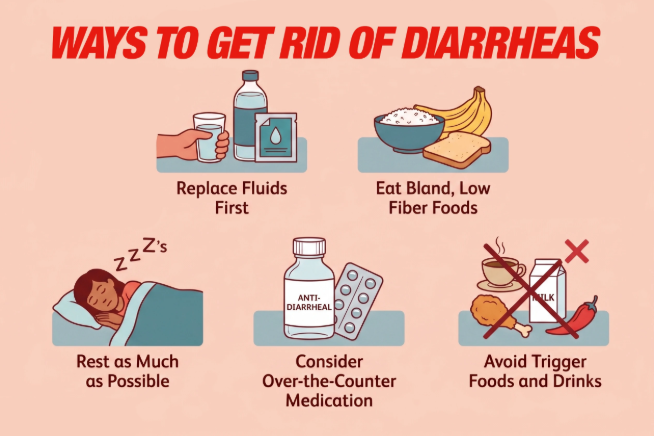
Replace Fluids First
Diarrhea drains water and electrolytes far faster than most people realize, and dehydration is often what turns a manageable day into a trip to the ER. Sip water, clear broths, or electrolyte solutions like Pedialyte or diluted sports drinks throughout the day rather than drinking large amounts at once, which can sometimes worsen nausea.
Eat Bland, Low Fiber Foods
Foods like bananas, white rice, applesauce, and plain toast, often referred to as the BRAT diet, are gentle on an irritated digestive system and help firm up loose stools without adding further inflammation. Introduce these foods gradually as your appetite returns rather than eating a full meal right away.
Rest as Much as Possible
Fighting an infection or recovering from digestive irritation takes real energy, and pushing through normal activity levels can slow down the healing process. Give your body permission to slow down, even if that just means resting on the couch instead of continuing your usual routine.
Consider Over-the-Counter Medication
Loperamide and bismuth subsalicylate can offer relief for adults dealing with mild to moderate symptoms by slowing gut motility or coating the digestive tract. These medications should be avoided in children under five, anyone with bloody stool, and anyone running a high fever, since slowing down the gut in those cases can sometimes make an underlying infection worse.
Avoid Trigger Foods and Drinks
Dairy, caffeine, alcohol, fatty foods, and spicy foods all place additional stress on a digestive system that is already working overtime, and continuing to consume them can prolong symptoms significantly. Sticking to bland, simple foods for a few days gives your gut the best chance to fully recover before returning to your normal diet.
What Foods Help Stop Diarrhea?
Choosing the right foods during a diarrhea episode can meaningfully speed up recovery, while the wrong foods can prolong or worsen symptoms.
- Bananas, white rice, applesauce, and plain toast, commonly known as the BRAT diet, are gentle and binding
- Saltine crackers and clear broths provide easy-to-digest calories without irritating the digestive tract
- Plain boiled potatoes and skinless chicken offer bland protein and carbohydrates that are easy on the stomach
- Electrolyte drinks help replace lost sodium and potassium alongside fluids, which plain water alone does not fully address
- Avoid dairy, fried or fatty foods, spicy dishes, caffeine, and high fiber vegetables until symptoms have fully resolved
The BRAT diet should not be followed for more than two days since it lacks balanced nutrition, and if abdominal pain and diarrhea continue beyond that point, further evaluation is needed to identify the underlying cause.
Diarrhea Symptoms That Should Never Be Ignored!
While most diarrhea resolves on its own, certain accompanying symptoms indicate a more serious issue that requires prompt medical evaluation.
- Blood or pus in the stool, or stools that appear black or tarry
- High fever above 101.3°F accompanying diarrhea symptoms
- Severe abdominal pain that does not ease between bowel movements
- Signs of dehydration include dry mouth, sunken eyes, dizziness, or significantly reduced urination
- Diarrhea lasting longer than 3 days without any improvement
- Unintentional weight loss occurring alongside ongoing digestive symptoms
When to Go to the ER
Do not wait if any of the following symptoms accompany your diarrhea:
- Blood or pus in the stool, or black and tarry stools
- Signs of severe dehydration, such as dizziness, confusion, or no urination for 8 or more hours
- High fever above 101.3°F that does not respond to medication
- Severe abdominal pain that is worsening rather than improving
- Diarrhea lasting more than 3 days with no signs of improvement
Memorial Springs ER provides 24/7 walk-in emergency care with on-site labs, IV fluid therapy, and rapid evaluation for abdominal pain and dehydration-related complications, with an average ER wait time of just 12 minutes, patients who need urgent attention can receive prompt medical care without unnecessary delays.
Diarrhea Care at Memorial Springs ER
Diarrhea usually resolves at home, but persistent symptoms, severe dehydration, or signs of a serious infection deserve prompt medical attention. At Memorial Springs ER, our board-certified physicians provide fast, walk-in emergency care with on-site lab testing to identify the cause of your symptoms and begin treatment right away. We treat patients of all ages, including children, and our team is equipped to manage everything from mild dehydration to more serious digestive emergencies around the clock.
Key Takeaways
- Most diarrhea resolves within 24 to 48 hours with proper hydration, rest, and bland foods
- Common causes include viral and bacterial infections, food poisoning, food intolerances, and certain medications
- The BRAT diet and electrolyte replacement are the most effective home remedies for fast relief
- Avoid dairy, caffeine, fatty foods, and spicy foods until symptoms have fully resolved
- Blood in the stool, high fever, severe abdominal pain, or signs of dehydration require immediate medical evaluation
- Diarrhea lasting more than 3 days without improvement should never be managed at home alone
Trusted Health Resources
The medical information in this article is informed by guidelines from these authoritative organizations:
Medical Disclaimer
The information provided on this blog is for general informational and educational purposes only. It is not a substitute for professional medical advice, diagnosis, or treatment. Always seek the advice of a qualified healthcare provider regarding any medical condition. If you are experiencing a life-threatening medical emergency, call 911 or proceed immediately to the nearest emergency room.