

How to Stop a Runny Nose

A runny nose is one of the most common and frustrating symptoms people deal with, and whether it is triggered by a cold, seasonal allergies, a sinus infection, or cold weather, it affects your sleep, your concentration, and your ability to get through the day. The good news is that most cases respond well to home treatment when you match the right remedy to what is actually causing it.
That distinction matters more than most people realize, because an antihistamine works for allergies but does little for a cold, and a decongestant helps with swelling but will not clear a bacterial infection. This guide covers the most common causes, the fastest remedies, the right medications, and the warning signs that mean it is time to seek professional care at urgent care near me.
What Causes a Runny Nose?
A runny nose, medically known as rhinorrhea, occurs when the mucous membranes lining the nasal passages become irritated and begin overproducing mucus to flush out whatever is triggering the response. According to the Texas Department of State Health Services, upper respiratory conditions, including colds, allergies, and sinus infections, are among the most common reasons Texans seek medical care.
- The common cold is the most frequent cause, as viral infections trigger the immune system to produce excess mucus as part of its natural defense response
- Seasonal allergies cause the body to release histamine in response to pollen, dust, mold, or pet dander, which directly overstimulates mucus production in the nasal passages
- Cold weather and dry air irritate the nasal lining and prompt it to produce additional mucus as a protective response to harsh environmental conditions
- Sinus infections can produce thick or discolored mucus that drains into the nasal passages and may persist longer than a typical cold if a bacterial infection develops
- Non-allergic rhinitis is triggered by irritants like smoke, strong odors, pollution, or certain medications without any true allergic response involved
How to Stop a Runny Nose Fast?
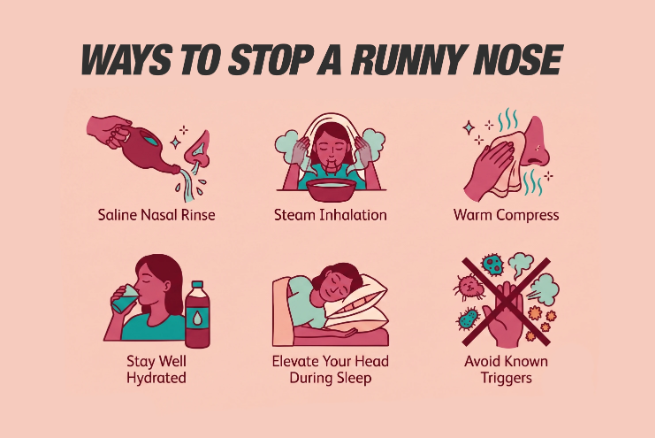
Most runny noses respond well to home treatment when the right approach matches the underlying cause. These are the most effective remedies for faster relief without immediately reaching for medication.
Saline Nasal Rinse
Flushing the nasal passages with a saline solution using a neti pot or squeeze bottle removes excess mucus, allergens, and irritants directly from the nasal cavity and is generally safe for older children and adults when used correctly with distilled or previously boiled water. For infants and young toddlers, saline drops or a gentle saline spray are more appropriate than a rinse device. This is widely considered one of the most accessible first steps for a runny nose in the right age group.
Steam Inhalation
Breathing in steam from a bowl of hot water or sitting in a warm shower loosens thickened mucus and reduces nasal inflammation throughout the passages. It makes it easier for the body to drain the buildup naturally without additional intervention. Essential oils such as eucalyptus should be avoided around infants and young children, as they can irritate the airway and, in concentrated amounts, pose safety risks.
Warm Compress
Placing a warm cloth across the nose, cheeks, and forehead several times per day reduces sinus pressure and inflammation while improving local circulation. This supports faster mucus clearance and provides noticeable comfort during the most uncomfortable parts of the day. Reapplying every few hours gives the best results when pressure is significant.
Stay Well Hydrated
Drinking plenty of fluids, including water, herbal teas, and clear broths throughout the day, helps thin mucus and supports the body's ability to flush it out naturally. Warm liquids can feel more soothing on an irritated throat, though staying consistently hydrated overall is what matters most for recovery. Adequate fluid intake also supports the immune system as it works to clear the underlying cause.
Elevate Your Head During Sleep
Keeping your head elevated with an extra pillow prevents mucus from pooling in the nasal passages overnight and reduces the blocked sensation that worsens when lying flat. Better drainage during sleep also means less morning congestion and a more comfortable start to the day. This simple adjustment makes a meaningful difference in sleep quality during any illness involving nasal symptoms.
Avoid Known Triggers
If allergies are the cause, staying indoors on high-pollen days and keeping windows closed reduce the ongoing allergen exposure that keeps nasal passages irritated. Using indoor air purifiers adds further protection by removing airborne particles that continue to aggravate the nasal lining throughout the day and night.
Over-the-Counter Medications That Can Help
When home remedies are not enough, several over-the-counter options offer targeted relief depending on what is causing the runny nose.
- Antihistamines such as cetirizine, loratadine, and fexofenadine are the most effective choice for allergy-driven runny noses, as they block the histamine response that triggers excess mucus production
- Older antihistamines like diphenhydramine work well at bedtime when allergy symptoms are disrupting sleep, though their sedating effect makes them unsuitable for daytime use
- Pseudoephedrine reduces nasal congestion by constricting blood vessels in the nasal membranes, though it is kept behind the pharmacy counter in many states and should be used as directed. Oral phenylephrine, found in many over-the-counter products, has been found by an FDA advisory panel to be no more effective than a placebo for nasal congestion, so it is worth discussing options with a pharmacist
- Nasal steroid sprays such as fluticasone reduce nasal inflammation over time and work best for persistent allergy-related runny noses, though they need several days of consistent use to take full effect
- Saline nasal sprays are a medication-free alternative safe for children, pregnant individuals, and anyone who prefers to avoid systemic medication while still getting meaningful nasal relief
Symptoms That Often Accompany a Runny Nose
A runny nose rarely appears in isolation, and the symptoms around it are often the clearest clue to what is actually causing it.
- Sneezing and itchy or watery eyes alongside a runny nose almost always signal allergies rather than a viral infection, particularly during known pollen seasons
- A mild sore throat, low-grade fever, and fatigue alongside nasal discharge typically point to a viral upper respiratory infection like the common cold
- Yellow or green mucus is a normal part of the body's immune response and can occur with both viral and bacterial infections, so color alone does not confirm which one you have
- Facial pressure, pain around the cheeks and eyes, or heaviness behind the forehead suggests active sinus involvement that may be worth having evaluated if it does not improve
- A runny nose in a child with no other cold symptoms may indicate a foreign object lodged in one nostril and should be assessed by a medical provider promptly
For parents concerned about a child with a runny nose, fever, or difficulty breathing, our pediatric emergency services are available around the clock with an average ER wait time of under 12 minutes at Memorial Springs ER.
Who Is Most at Risk for a Persistent Runny Nose?
While anyone can develop a runny nose, certain groups are far more likely to experience symptoms that linger or recur frequently.
- Young children are more susceptible than adults because their immune systems are still developing, and they face constant pathogen exposure through school and daycare environments
- People with seasonal or perennial allergies experience recurring rhinorrhea during pollen seasons or year-round when household triggers like dust mites, mold, and pet dander are present
- Individuals with chronic sinusitis, nasal polyps, or a deviated septum experience more frequent and prolonged episodes because their anatomy makes proper nasal drainage consistently difficult
- People with weakened immune systems from illness or chronic conditions take significantly longer to recover from the viral infections most commonly responsible for a runny nose
- Residents of the Greater Houston and Spring area face higher year-round allergen exposure due to the local climate, making persistent rhinorrhea a particularly common concern in this region
How to Prevent a Runny Nose?
Not every runny nose is preventable, but a few consistent habits reduce how often you experience one and how severe it tends to be.
- Wash hands frequently, especially after touching shared surfaces, as hand washing is the single most effective way to prevent the viral infections that most commonly cause a runny nose
- Keep windows closed on high pollen days and use indoor air purifiers to reduce allergen levels in your home and bedroom throughout allergy season
- Run a humidifier in your bedroom during dry or cold months to keep the nasal lining from becoming dry, irritated, and more vulnerable to infection
- Avoid cigarette smoke, strong chemical odors, and other airborne irritants that directly trigger inflammation in sensitive nasal passages
- Stay current with the annual flu vaccine to reduce both the likelihood and severity of one of the most common causes of a prolonged runny nose
When to Go to the ER?
Most runny noses clear up within seven to ten days, but some situations need immediate attention. Visit Memorial Springs ER right away if you notice any of the following.
- High fever above 103 degrees Fahrenheit that is not responding to fever reducers, especially in young children or elderly adults
- Symptoms lasting more than ten days with no improvement, which may point to a bacterial sinus infection needing antibiotics
- Thick discolored discharge alongside severe facial pain, eye pressure, or swelling around the eye area that is worsening
- Clear fluid draining from one nostril only after a head injury, which may indicate a cerebrospinal fluid leak
- Breathing difficulty, chest tightness, wheezing, or throat swelling accompanying nasal symptoms
- Any nasal congestion or illness in an infant under three months, as symptoms can escalate quickly at that age
- Sudden severe headache, neck stiffness, or confusion developing alongside sinus or nasal symptoms
If fever is also present, our guide on when a fever means an emergency covers when to seek immediate care based on age and temperature.
Runny Nose Care at Memorial Springs ER
When a runny nose is accompanied by high fever, severe sinus pain, or symptoms that keep worsening despite home treatment, Memorial Springs ER is here around the clock with no wait times and board-certified physicians ready to see you immediately. We offer on-site lab testing and imaging to identify any underlying infection quickly. Do not wait for things to get worse. Visit Memorial Springs ER in Spring, Texas, today.
Trusted Health Resources
The medical information in this article is informed by guidelines from these authoritative organizations:
Medical Disclaimer
The information provided on this blog is for general informational and educational purposes only. It is not a substitute for professional medical advice, diagnosis, or treatment. Always seek the advice of a qualified healthcare provider regarding any medical condition. If you are experiencing a life-threatening medical emergency, call 911 or proceed immediately to the nearest emergency room.