

Can Allergies Cause Fever

If you have ever dealt with a stuffy nose, itchy eyes, and constant sneezing during allergy season, you know how frustrating it can feel when new symptoms suddenly appear. When a fever joins the mix, it is natural to wonder if your allergies are the reason you feel worse or if something else is going on.
So, can allergies cause fever? The answer is no. Allergies do not directly cause a true fever, but they can irritate your airways and increase the risk of infections that may lead to fever. If symptoms worsen, searching for urgent care near me can help you get timely medical evaluation. Recognizing the difference between allergies and infections can prevent complications.
Why Allergies May Feel Like a Fever
Allergies can sometimes leave you feeling unwell, tired, and uncomfortable in ways that resemble a mild illness. Although allergies do not typically cause a true fever, the body’s response to allergens can create symptoms that make you feel overheated, drained, or generally sick. Many people mistake these sensations for signs of a fever because several allergy symptoms overlap with common infections.
- Immune System Response: When your body reacts to allergens, it releases chemicals that trigger inflammation and other symptoms. This immune activity can make you feel fatigued, uncomfortable, and unlike your usual self.
- Inflammation in the Body: Allergic reactions cause inflammation in areas such as the nose, throat, and airways. This inflammation can create sensations of warmth, pressure, and irritation that may feel similar to being sick.
- Sinus Pressure and Congestion: Blocked nasal passages and sinus discomfort can cause headaches, facial pressure, and tiredness. These symptoms may contribute to the feeling that you have a fever even when your temperature is normal.
- Poor Sleep and Fatigue: Allergy symptoms like coughing, sneezing, and congestion can interrupt sleep quality. Lack of rest may leave you feeling weak, exhausted, and similar to how you feel during a mild illness.
Allergy Symptoms That Can Mimic Feeling Sick
Allergy symptoms can sometimes feel similar to those caused by a cold, flu, or other illnesses. While allergies do not usually cause a fever, the body’s reaction to allergens can create discomfort that makes you feel run-down or unwell. Common symptoms that may be mistaken for sickness include:
- Fatigue and Low Energy: Allergies can make your body work harder to respond to triggers, leaving you feeling tired, sluggish, and less energetic throughout the day.
- Headache and Facial Pressure: Sinus congestion from allergies can create pressure around the forehead, cheeks, and eyes, which may feel similar to the discomfort caused by an infection.
- Runny or Stuffy Nose: Nasal irritation and increased mucus production can cause symptoms that overlap with common colds, making it difficult to tell the difference.
- Sore or Irritated Throat: Postnasal drip from allergies can irritate the throat, causing scratchiness, coughing, or discomfort that may feel like an illness.
- Body Aches and General Discomfort: Although not caused by a fever, ongoing inflammation and poor sleep from allergy symptoms can sometimes make your body feel achy or worn out.
- Watery or Itchy Eyes: Eye irritation, redness, and excessive tearing are common allergy symptoms that can add to the overall feeling of being unwell.
How Allergies Affect Your Immune System
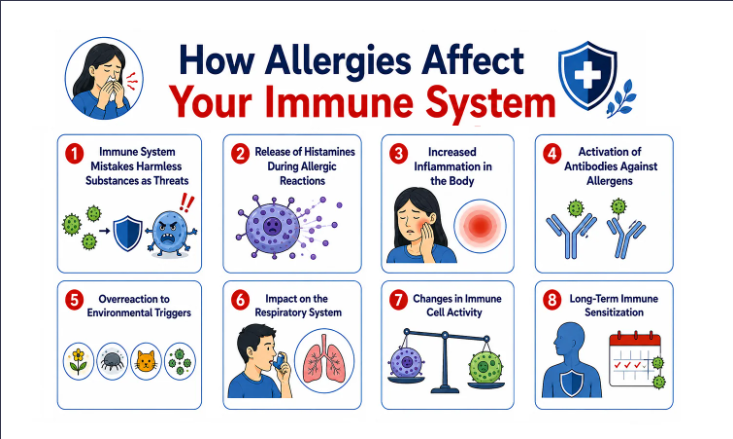
Allergies occur when your immune system responds strongly to substances that are usually harmless, such as pollen, dust, or certain foods. This reaction can create a range of symptoms that affect your daily comfort and overall well-being. Although allergies are not caused by a weak immune system, they can influence how your body reacts to common environmental triggers. Understanding this process can help explain why allergy symptoms may feel similar to being sick.
Immune System Mistakes Harmless Substances as Threats
Your immune system protects your body by identifying and responding to harmful invaders. With allergies, it mistakenly identifies harmless substances as dangerous and begins an unnecessary defense response. This reaction can lead to symptoms such as sneezing, itching, congestion, and irritation. The immune system’s overreaction is what causes many allergy-related discomforts.
Release of Histamines During Allergic Reactions
When your body detects an allergen, immune cells release chemicals such as histamine to help fight the perceived threat. Histamine triggers inflammation and affects tissues throughout the body, especially in the nose, eyes, skin, and airways. This chemical response causes common allergy symptoms like runny nose, watery eyes, and itching. The intensity of symptoms depends on how strongly your immune system reacts.
Increased Inflammation in the Body
Allergic reactions activate inflammatory processes that help the immune system respond to triggers. This inflammation can affect different parts of the body and contribute to swelling, irritation, and discomfort. Ongoing inflammation may make allergy symptoms feel more persistent or similar to those experienced during an illness. Managing exposure to allergens can help reduce this immune response.
Activation of Antibodies Against Allergens
People with allergies often produce a specific antibody called immunoglobulin E (IgE) when exposed to certain allergens. These antibodies attach to immune cells and help trigger allergic reactions when the allergen is encountered again. This process causes the immune system to respond faster and more strongly with repeated exposure. It is a key part of how allergic sensitivity develops.
Overreaction to Environmental Triggers
The immune system of someone with allergies may respond excessively to everyday substances that do not normally cause harm. Common triggers include pollen, pet dander, mold, and dust mites. This heightened sensitivity can cause repeated immune reactions and ongoing symptoms. Reducing exposure to triggers may help lower the frequency and severity of reactions.
Impact on the Respiratory System
Allergies can affect the airways by causing inflammation and increased mucus production. This immune response may lead to coughing, wheezing, throat irritation, or nasal congestion. People with respiratory allergies may feel as though they have a cold or another infection. Keeping allergic inflammation under control can support easier breathing and improved comfort.
Changes in Immune Cell Activity
During an allergic reaction, different immune cells become activated and communicate with each other to defend the body. These cells release signals that increase inflammation and maintain the allergic response. This ongoing immune activity can contribute to repeated or long-lasting symptoms. The severity of symptoms depends on the type of allergen and the individual’s sensitivity.
Long-Term Immune Sensitization
Repeated exposure to allergens can make the immune system more familiar with specific triggers over time. This process, known as sensitization, can cause stronger reactions with future exposures. As the immune system becomes more reactive, symptoms may appear more easily and last longer. Identifying and managing triggers can help reduce unnecessary immune responses.
Can Allergies Lead to a Fever From an Infection?
Yes, allergies can sometimes occur alongside an infection that causes a fever, but allergies themselves do not directly cause a fever. When the body is fighting an infection, symptoms such as congestion, fatigue, and a runny nose may overlap with allergy symptoms. This can make it difficult to determine whether your discomfort is from an allergic reaction or an illness. A true fever is usually a sign that your immune system is responding to an infection or another medical condition.
Other Infections That May Cause Fever
A fever usually occurs when your immune system responds to an infection. Some infections can cause symptoms that look similar to allergies, such as congestion, coughing, and fatigue. Knowing the differences between allergy symptoms and infection signs can help you determine when to seek care.
- Respiratory Infections: These affect the nose, throat, and airways, often causing fever, cough, congestion, and tiredness that may resemble allergies.
- Viral Infections: Viruses can trigger fever, chills, body aches, sore throat, and fatigue as your immune system fights the infection.
- Bacterial Infections: These infections may cause fever and more severe symptoms as the body responds to harmful bacteria.
- Sinus Infections: Sinus infections can cause congestion, facial pressure, drainage, and sometimes fever, making them easy to confuse with allergies.
- Other Infections: Some infections affecting the body more widely may cause fever, weakness, and discomfort along with other symptoms.
When to Go to the ER
While allergies usually do not cause a fever, certain symptoms may indicate a more serious condition that requires immediate medical attention. Seek emergency care if symptoms become severe, worsen quickly, or affect your ability to breathe, stay hydrated, or function normally. The following signs may require evaluation at an emergency room:
- Trouble Breathing: Seek immediate care if you experience severe shortness of breath, wheezing, chest tightness, or difficulty breathing during an allergic reaction.
- Swelling of the Face or Throat: Sudden swelling of the lips, tongue, face, or throat can block the airway and may be a sign of a severe allergic reaction.
- High or Persistent Fever: A fever that is very high, lasts several days, or occurs with worsening symptoms may indicate an infection needing medical evaluation.
- Severe Weakness or Confusion: Feeling extremely weak, dizzy, confused, or unable to perform normal activities may require urgent care.
- Signs of Dehydration: Seek emergency help if you cannot keep fluids down or have signs such as very little urination, dry mouth, or severe dizziness.
At Memorial Spring ER, patients experiencing severe allergy symptoms, fever-related concerns, or signs of complications can receive prompt medical evaluation, with an average ER wait time of under 12 minutes to help start treatment quickly when urgent care is needed.
Allergy & Fever Care At Memorial Spring ER
If you develop a fever along with allergy symptoms, it is important to determine whether you are experiencing an allergy flare or an underlying infection. Memorial Spring ER provides 24/7/365 emergency care for worsening allergy symptoms, fever, and related complications. Our experienced medical team offers prompt evaluation, symptom relief, and personalized treatment to help address your concerns.
Can allergies cause fever? While allergies themselves do not usually cause a true fever, they may increase the risk of infections that can lead to one. If you experience persistent fever, breathing difficulties, severe congestion, or worsening symptoms, visit Memorial Spring ER for timely evaluation and appropriate care.
Key Takeaways
- Allergies do not directly cause a true fever, but they can create symptoms that make you feel sick or fever-like.
- Allergy symptoms such as fatigue, congestion, headache, and throat irritation can overlap with symptoms of infections.
- A fever usually indicates that your body is responding to an infection or another underlying condition, not an allergic reaction.
- Allergies affect the immune system by triggering an overactive response to harmless substances like pollen, dust, or pet dander.
- Seek emergency care for trouble breathing, severe swelling, high fever, confusion, or signs of dehydration.
Related Emergency Services
Urgent Care Services
Prompt treatment for non-life-threatening illnesses and minor injuries with zero waiting time.
Urgent Emergency Care
Comprehensive 24/7 emergency medical services for high-severity, critical illnesses, and sudden injuries.
Pediatric Emergency Services
Compassionate, specialized emergency care for infants, toddlers, and children in a comforting environment.
Related Articles
Trusted Health Resources
The medical information in this article is informed by guidelines from these authoritative organizations:
Medical Disclaimer
The information provided on this blog is for general informational and educational purposes only. It is not a substitute for professional medical advice, diagnosis, or treatment. Always seek the advice of a qualified healthcare provider regarding any medical condition. If you are experiencing a life-threatening medical emergency, call 911 or proceed immediately to the nearest emergency room.