

How To Get Rid Of Flu Fast

Feeling suddenly exhausted, achy, feverish, and unable to manage your normal routine can make the flu especially difficult. Symptoms such as chills, body aches, headache, sore throat, cough, and extreme fatigue can leave you feeling miserable and concerned about how serious your illness may become.
Although many people recover from the flu without complications, symptoms can sometimes worsen or lead to serious health problems. Seek prompt medical attention for trouble breathing, chest pain, confusion, severe weakness, or signs of dehydration. For concerning symptoms, visit urgent care.
Dangerous Flu Symptoms
Most flu cases improve without serious complications, but influenza can sometimes progress to pneumonia, respiratory failure, dehydration, or other life-threatening problems. A 2010–2019 U.S. study of 104,969 people hospitalized with influenza found that 16.7% required ICU admission, showing that severe flu can require intensive medical care.
- Difficulty breathing or shortness of breath.
- Persistent chest pain or pressure.
- Severe dizziness, confusion, or difficulty staying awake.
- Severe weakness, unsteadiness, or inability to perform normal activities.
- Not urinating or other signs of significant dehydration.
- Seizures.
- Severe muscle pain.
- Fever or cough that improves but suddenly returns or becomes worse.
- Worsening of an existing medical condition, such as asthma or heart disease.
- In children, fast breathing, bluish lips or face, chest pain, dehydration, seizures, or unusual difficulty waking or interacting.
Effective Ways To Get Rid Of Flu Fast
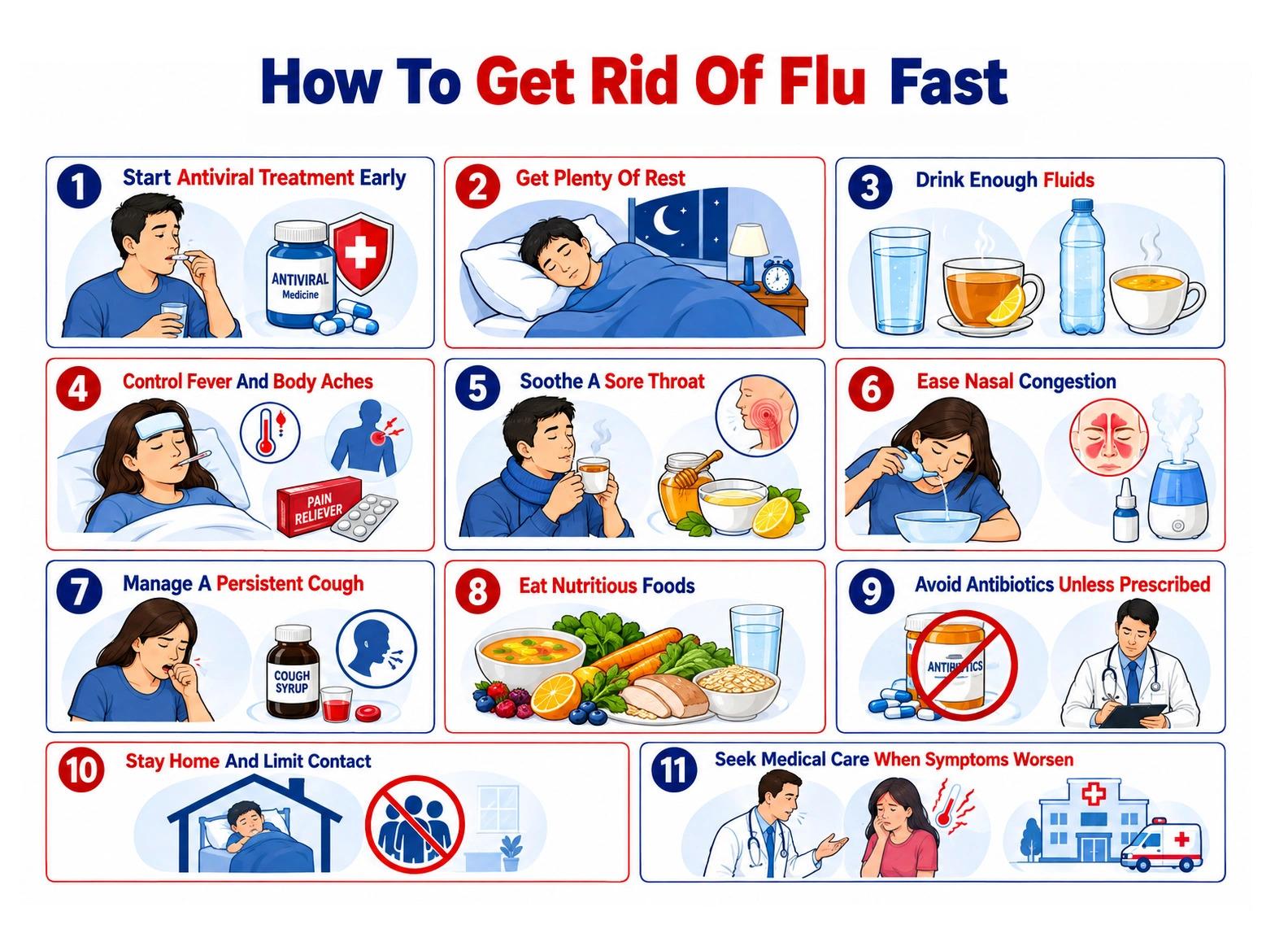
When the flu leaves you with fever, chills, body aches, congestion, cough, and overwhelming fatigue, it is natural to want to feel better as quickly as possible. While there is no instant cure for influenza, the right care can ease symptoms, support recovery, and lower the risk of complications.
Start Antiviral Treatment Early
Prescription antiviral medicines can reduce the severity and duration of flu when appropriate. They work best when started within 48 hours of symptoms beginning, although treatment may still benefit people with severe illness or a higher risk of complications.
Get Plenty Of Rest
Your body needs energy to fight the influenza virus and recover from the physical stress of infection. Resting and limiting strenuous activities can help you conserve energy while reducing the chance of worsening fatigue or delaying recovery.
Drink Enough Fluids
Fever, sweating, vomiting, and reduced appetite can increase your risk of dehydration during the flu. Drink water, broth, or other suitable fluids regularly, particularly if you have a fever or are losing fluids through vomiting or diarrhea.
Control Fever And Body Aches
Fever, headaches, and muscle aches can make the flu particularly uncomfortable and interfere with sleep. Appropriate over-the-counter fever or pain medicines may provide relief when used according to the label or a healthcare professional's instructions.
Soothe A Sore Throat
A sore, scratchy throat commonly accompanies influenza and can make swallowing uncomfortable. Warm liquids, honey for people over 1 year of age, and appropriate throat-soothing products may help reduce irritation while the infection runs its course.
Ease Nasal Congestion
A blocked or runny nose can make breathing uncomfortable and interfere with sleep. Saline nasal spray, humidified air, and adequate fluid intake can help loosen mucus and relieve nasal irritation without treating the underlying virus.
Manage A Persistent Cough
Flu-related coughing can linger even after other symptoms begin improving. Staying hydrated can help keep respiratory secretions thinner, while appropriate cough-relief measures may make sleeping and daily activities more manageable.
Eat Nutritious Foods
You may have little appetite when you have influenza, but adequate nutrition supports normal immune function and recovery. Choose small, easy-to-tolerate meals containing foods such as soups, fruits, vegetables, grains, eggs, or other protein sources.
Avoid Antibiotics Unless Prescribed
Antibiotics do not kill influenza viruses and will not make uncomplicated flu resolve faster. They may be appropriate only when a healthcare professional identifies a bacterial infection, such as certain cases of secondary bacterial pneumonia.
Stay Home And Limit Contact
Staying home while you are sick gives your body time to recover and reduces the likelihood of spreading influenza to others. CDC guidance recommends returning to normal activities when symptoms are improving overall, and you have been fever-free for at least 24 hours without using fever-reducing medication.
Seek Medical Care When Symptoms Worsen
Some people are more likely to develop serious flu complications, including older adults, young children, pregnant people, and those with certain chronic medical conditions. Prompt medical evaluation is particularly important when symptoms are severe, progressive, or accompanied by breathing problems, chest pain, confusion, or significant dehydration.
Who Is At Higher Risk Of Flu Complications?
Some people are more likely to develop serious flu complications than others. Knowing if you are in a higher-risk group can help you take symptoms seriously and seek care early when needed.
- Adults 65 And Older: Age-related immune changes can increase the risk of severe flu.
- Young Children: Children under 5, especially under 2, are more vulnerable to complications.
- Pregnant People: Pregnancy can increase the risk of severe influenza illness.
- Chronic Lung Conditions: Asthma and COPD can raise the risk of breathing complications.
- Heart Disease: Flu can put extra strain on the heart and worsen existing conditions.
- Diabetes: Diabetes can make it harder for the body to fight infections.
- Weakened Immune System: Reduced immunity can increase the risk of severe flu.
- Severe Obesity: Severe obesity is linked to a higher risk of flu complications.
When To Go To The ER For Flu
Most people with the flu can recover at home, but some complications require immediate emergency evaluation. Go to the ER if your condition is rapidly worsening, you cannot stay awake or respond normally, or you develop signs that suggest your breathing, circulation, hydration, or neurological function is being seriously affected.
- Severe difficulty breathing or struggling to get enough air.
- Persistent chest or abdominal pressure that does not go away.
- New confusion, inability to stay awake, or difficulty being awakened.
- A seizure or sudden loss of normal responsiveness.
- Severe weakness or unsteadiness that makes walking or standing difficult.
- Very little or no urine, suggesting significant dehydration.
- A fever or cough that improves but then suddenly returns or becomes substantially worse.
- A serious worsening of an existing chronic medical condition.
- For a child, bluish lips or face, ribs pulling inward with each breath, or unusually fast or labored breathing.
- For a child, inability to stay alert, severe dehydration, seizures, or refusal to walk because of severe muscle pain.
When you or someone you love is struggling with severe flu symptoms, getting evaluated quickly can feel especially important. If you need emergency care, Memorial Springs ER offers ER wait time under 12 minutes, helping you get assessed without unnecessary delays.
How To Treat Flu
When the flu brings fever, body aches, congestion, coughing, and exhaustion, it is natural to want relief as soon as possible. Treatment mainly focuses on easing symptoms and supporting your body's recovery. Some people may also need medical treatment to reduce the risk of serious complications.
- Antiviral Medication: Most doctors recommend antivirals for people with severe flu or a higher risk of complications. They work best when started within 48 hours.
- OTC Fever Medicine: Most doctors recommend acetaminophen or ibuprofen when appropriate for fever, headaches, and body aches. Follow the label directions.
- Stay Hydrated: Drink water, broth, or other fluids regularly to replace fluids lost through fever, sweating, vomiting, or poor intake.
- Get Plenty Of Rest: Rest helps your body conserve energy while fighting the infection. Avoid strenuous activity until you feel better.
- Use A Humidifier: A clean cool-mist humidifier may ease nasal irritation, congestion, and a dry cough.
- Try Saline Nasal Spray: Saline spray can moisturize irritated nasal passages and help loosen mucus during congestion.
- Soothe A Sore Throat: Warm liquids, throat lozenges, or honey can help relieve throat irritation and coughing. Honey is not suitable for children under 1 year.
- Relieve Cough: Fluids and throat-soothing measures may reduce cough discomfort. Most doctors recommend checking with a pharmacist before using cough medicine.
- Eat Nutritious Foods: Choose small, easy-to-tolerate meals such as soup, fruits, vegetables, grains, and protein-rich foods when your appetite is low.
- Avoid Unnecessary Antibiotics: Most doctors recommend avoiding antibiotics for uncomplicated flu because they do not treat viral infections. They may be needed for a bacterial complication.
- Stay Home: Rest at home and limit close contact with others while you are sick to reduce the spread of influenza.
Flu Care At Memorial Springs ER
When flu symptoms become severe, worsen unexpectedly, or raise concerns about serious complications, Memorial Springs ER is available 24/7 to provide prompt emergency evaluation and care. Our emergency team can assess your symptoms, identify potential complications, and recommend appropriate treatment based on your condition.
If you or someone you love is struggling with severe flu symptoms, do not wait for the condition to become worse. Visit Memorial Springs ER for timely emergency medical attention when symptoms such as breathing difficulties, chest pain, severe dehydration, confusion, or extreme weakness develop.
Key Takeaways
- Flu usually improves with supportive care, but recovery can take several days.
- Antiviral medication may help when started early, especially for higher-risk patients.
- Rest, fluids, symptom relief, and nutritious foods can support recovery.
- Seek emergency care for breathing problems, chest pain, confusion, severe dehydration, or worsening symptoms.
- Do not use antibiotics for flu unless a bacterial infection is diagnosed.
- Severe or rapidly worsening symptoms should not be ignored.
Frequently Asked Questions
How Long Is The Flu Contagious?
Most people can spread the flu from about 1 day before symptoms begin to 5–7 days after becoming sick, with the highest contagiousness during the first 3 days. Staying home while sick and limiting close contact can help reduce the spread.
How Long Does Flu Last?
Most uncomplicated flu symptoms improve within 3–7 days, although cough and tiredness may last longer. If symptoms worsen or improve and then suddenly return, seek medical attention.
What Is Flu A?
Flu A is one of the main types of influenza that causes seasonal illness, including infections from H1N1 and H3N2 viruses. It can cause mild to severe illness and is also associated with influenza pandemics.
What Is Flu B?
Flu B is another major type of influenza virus that causes seasonal flu and is not divided into subtypes like Flu A. It can still cause serious illness, especially in people at higher risk of complications.
Can You Get Rid Of The Flu In 24 Hours?
There is no reliable way to completely get rid of the flu within 24 hours, but antiviral medication may shorten the illness when started early, especially within 48 hours. Rest, fluids, and symptom relief can help support recovery.