

How To Treat Sinus Infection?

A sinus infection can make everyday life uncomfortable, causing symptoms such as nasal congestion, facial pressure, headache, thick mucus, coughing, and a reduced sense of smell. If these symptoms persist or become more severe, it is understandable to wonder what is causing them and whether medical care is needed.
Some sinus infections improve on their own, while persistent or worsening symptoms may require medical evaluation. If you are searching for urgent care, seek prompt care for severe symptoms, and get immediate medical attention for swelling around the eyes, vision changes, confusion, or a severe headache.
What Is A Sinus Infection?
A sinus infection, medically called sinusitis or rhinosinusitis, occurs when the tissue lining the sinuses becomes inflamed and swollen, interfering with normal mucus drainage. It may develop after a viral cold, allergies, or, less commonly, a bacterial infection. A large study of U.S. adults found that the one-year prevalence of sinusitis was 15.2%, showing how common this condition can be.
Dangerous Sinus Infection Symptoms You Should Never Ignore
Most sinus infections do not become dangerous, but certain symptoms may indicate a serious complication and should never be ignored. Seek prompt medical attention if you experience:
- Swelling or redness around the eyes.
- Severe or rapidly worsening facial swelling.
- Vision changes, including double vision.
- Severe headache that is unusual or worsening.
- High fever that does not improve.
- Stiff neck.
- Confusion or unusual drowsiness.
- Persistent vomiting.
- Severe pain around the eyes or forehead.
- New weakness, difficulty speaking, or other neurological changes.
Effective Sinus Infection Treatments
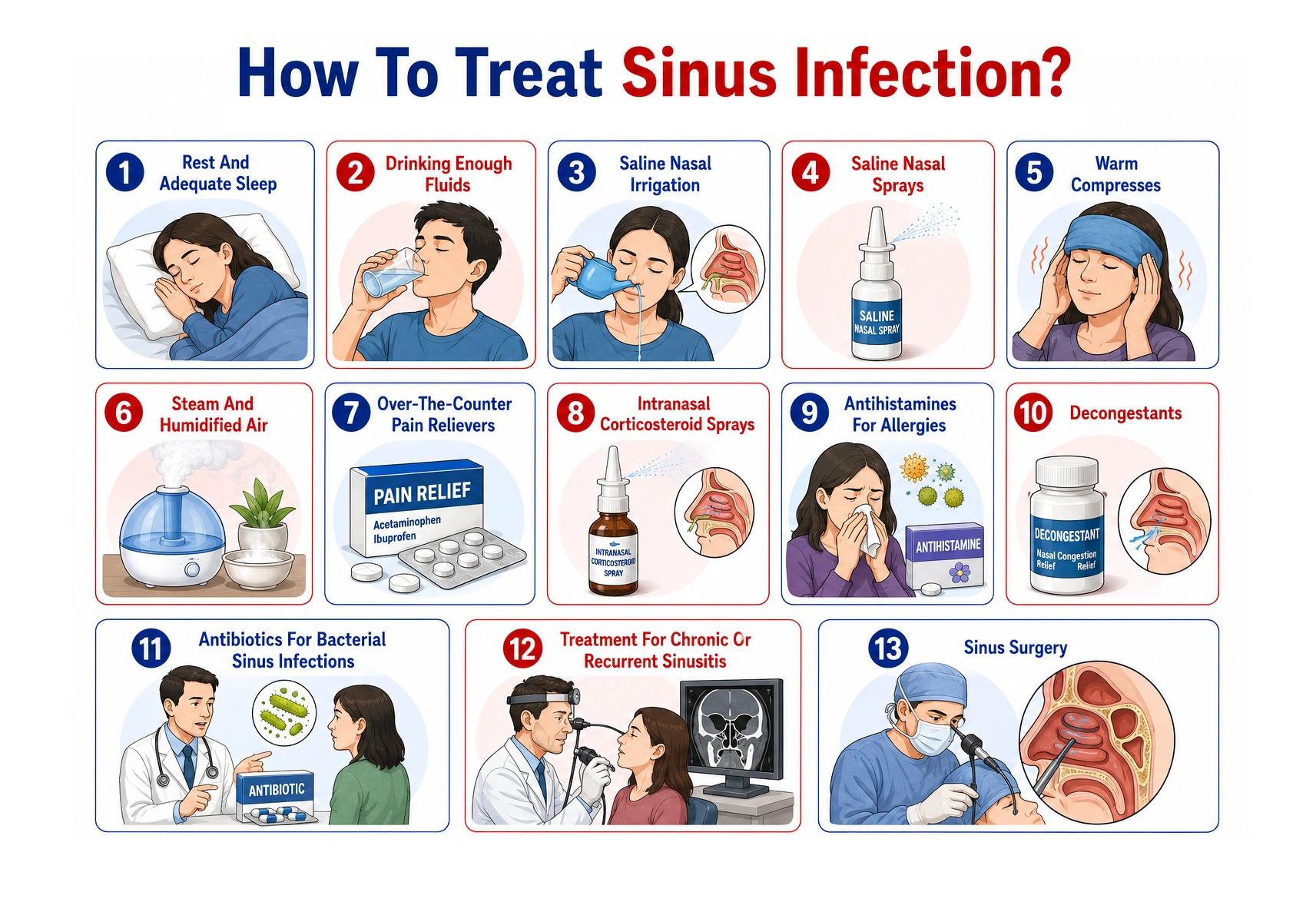
Feeling congested, tired, and uncomfortable from a sinus infection can make you want relief as quickly as possible. However, the most effective sinus infection treatment depends on the cause, severity, duration, and whether the infection is viral, bacterial, allergic, or related to another underlying condition. The following treatment options may help manage symptoms and address specific causes.
Rest and Adequate Sleep
Getting enough rest can support your body's recovery while you are dealing with an infection. Fatigue is common when sinus pressure, congestion, coughing, and poor sleep occur together. Reducing strenuous activity and prioritizing sleep may help you feel more comfortable. If fatigue becomes severe or is accompanied by concerning symptoms, seek medical advice.
Drinking Enough Fluids
Staying adequately hydrated may help prevent mucus from becoming excessively thick and can support overall recovery. Water and other nonalcoholic fluids can be useful, especially if you have a fever. Hydration needs vary depending on age, health, and medical conditions. People with fluid restrictions should follow their healthcare provider's recommendations.
Saline Nasal Irrigation
Saline nasal irrigation can help rinse mucus and irritants from the nasal passages and may improve congestion. Only distilled, sterile, or previously boiled and cooled water should be used for nasal rinsing devices. Tap water should not be used directly for nasal irrigation. Clean the device according to the manufacturer's instructions after each use.
Saline Nasal Sprays
Saline nasal sprays can moisturize dry nasal passages and help loosen mucus. They may be useful for mild congestion and can generally be used as directed on the product label. Unlike medicated nasal decongestants, saline sprays do not cause rebound congestion. Ask a healthcare professional if you have questions about appropriate use.
Warm Compresses
Applying a warm, damp compress to the face may provide temporary relief from facial discomfort and sinus pressure. The warmth can feel soothing around the nose, cheeks, and forehead. Make sure the compress is comfortably warm rather than hot to avoid burns. Persistent or severe facial pain should be medically evaluated.
Steam and Humidified Air
Moist air may temporarily soothe dryness and nasal irritation for some people. A clean humidifier can add moisture to dry indoor air, particularly during dry weather. However, humidifiers should be cleaned regularly because poorly maintained devices can allow mold or bacteria to grow. Avoid using excessively hot steam because it can cause burns.
Over-The-Counter Pain Relievers
Over-the-counter pain relievers may help reduce headache, facial pain, and fever when used appropriately. Common options include acetaminophen or nonsteroidal anti-inflammatory drugs such as ibuprofen. These medicines are not suitable for everyone and may interact with other medications. Follow label directions and ask a healthcare professional if you are unsure which option is safe for you.
Intranasal Corticosteroid Sprays
Intranasal corticosteroid sprays can help reduce inflammation, particularly when allergies or chronic inflammation contribute to symptoms. Some products are available without a prescription, while others may require a healthcare provider's recommendation. Proper technique is important for effective use. Long-lasting or recurrent symptoms should be evaluated by a medical professional.
Antihistamines for Allergies
Antihistamines may help when allergy symptoms are contributing to nasal congestion, sneezing, or a runny nose. They are generally more useful for allergies than for a typical viral sinus infection. Some antihistamines can cause drowsiness or other side effects. A healthcare professional can help determine whether allergies are playing a role.
Decongestants
Decongestants may provide short-term relief from nasal congestion for some adults. However, certain oral decongestants may not be appropriate for people with high blood pressure, heart conditions, glaucoma, or other medical concerns. Medicated nasal decongestant sprays should generally not be used for prolonged periods because they can cause rebound congestion. Always follow the product instructions or a clinician's advice.
Antibiotics for Bacterial Sinus Infections
Antibiotics do not treat viral sinus infections and should not be used unnecessarily. A healthcare provider may prescribe antibiotics when bacterial sinusitis is suspected based on symptom duration, severity, or worsening after initial improvement. Antibiotics require evaluation and a prescription from a qualified healthcare professional. Clinical guidelines support either appropriate observation or antibiotic treatment for uncomplicated bacterial sinusitis in selected patients.
Treatment for Chronic or Recurrent Sinusitis
Chronic or frequently recurring sinus symptoms may require additional evaluation to identify underlying causes, such as nasal polyps, allergies, structural problems, or other conditions. A doctor may recommend further testing, including nasal examination or imaging when appropriate. Prescription medications or specialized treatments may be necessary. Treatment should be tailored to the underlying cause.
Sinus Surgery
Surgery may be considered for selected people with chronic sinusitis or structural problems that do not improve with appropriate medical treatment. Procedures such as endoscopic sinus surgery are performed by qualified specialists and require medical evaluation. Sinus surgery is a medical procedure that must be recommended and performed by an appropriately trained healthcare professional. It is not necessary for most cases of acute sinus infection.
When to Go to the ER
Most sinus infections can be managed outside the emergency room, but complications can occasionally develop and require immediate medical attention. The sinuses are located close to the eyes and brain, so severe or unusual symptoms should be taken seriously. Go to the ER when symptoms suggest a serious complication or when your condition is rapidly worsening.
- Significant swelling or redness around the eyes.
- Sudden vision changes or double vision.
- Severe swelling of the face.
- Confusion or changes in mental alertness.
- A stiff neck with a severe headache or fever.
- New seizures.
- Difficulty moving the eyes normally.
- Severe or rapidly worsening headache.
- New weakness, numbness, or difficulty speaking.
- Severe symptoms that worsen quickly despite treatment.
When you are already feeling sick and worried about severe symptoms, getting care quickly can provide reassurance and prompt evaluation. Our emergency room offers an ER wait time under 12 minutes, helping you receive timely attention when urgent symptoms need immediate assessment.
How to Prevent Sinus Infections
Although not every sinus infection can be prevented, reducing exposure to respiratory viruses and controlling factors that irritate the nasal passages may lower your risk. Good hygiene, allergy management, and avoiding irritants can help support healthy sinus function. People with frequent or chronic sinus problems may benefit from discussing prevention strategies with a healthcare professional.
- Wash your hands regularly with soap and water.
- Avoid touching your eyes, nose, and mouth with unwashed hands.
- Stay away from people who are sick when possible.
- Keep recommended vaccinations up to date.
- Manage allergies according to your healthcare provider's advice.
- Avoid cigarette smoke and secondhand smoke.
- Reduce exposure to air pollutants and other respiratory irritants.
- Use a clean humidifier if indoor air is excessively dry.
- Clean nasal irrigation devices properly after use.
- Use only sterile, distilled, or previously boiled and cooled water for nasal rinsing.
- Stay adequately hydrated.
- Seek medical evaluation for frequent or recurring sinus symptoms.
Sinus Infection Care at Memorial Springs ER
When a sinus infection causes severe facial pain, high fever, significant swelling, dehydration, or symptoms that are rapidly getting worse, Memorial Springs ER in Spring, Texas, is available 24/7 for emergency evaluation and care. Our emergency team can assess severe symptoms, perform appropriate diagnostic testing, and provide treatment based on your condition. If your sinus infection symptoms become severe or you are concerned about a potentially serious complication, do not wait for them to worsen. Visit Memorial Springs ER for prompt emergency medical attention.
Key Takeaways
- Most sinus infections are caused by viruses and may improve without antibiotics.
- Common symptoms include nasal congestion, facial pressure, headache, thick mucus, and reduced sense of smell.
- Saline irrigation, hydration, rest, and appropriate symptom-relief medicines may help manage discomfort.
- Antibiotics are only appropriate for some bacterial sinus infections and require evaluation by a healthcare professional.
- Seek urgent medical care for severe swelling around the eyes, vision changes, confusion, stiff neck, or rapidly worsening symptoms.
- Recurrent or long-lasting sinus infections may require evaluation for allergies, nasal polyps, or other underlying causes.
Frequently Asked Questions
Is a Sinus Infection Contagious?
A sinus infection itself is generally not contagious, but the viruses that commonly trigger sinus infections can spread between people. For example, a cold virus may spread through respiratory droplets and later contribute to sinus inflammation.
How Long Does a Sinus Infection Last?
Most acute sinus infections improve within about 7 to 10 days, particularly when they follow a common cold. Symptoms that last more than 10 days without improvement, become significantly worse after initially improving, or keep recurring should be evaluated by a healthcare professional.
What Causes Sinus Infections?
Sinus infections commonly develop when inflammation blocks normal sinus drainage and mucus builds up. Viruses cause most sinus infections, while allergies, smoking, nasal polyps, a deviated septum, and other structural problems can also contribute. Some cases are caused by bacteria, particularly when symptoms are severe, persistent, or worsen after initial improvement.