

Is A Upper Respiratory Infection Contagious?

If you’re dealing with a sore throat, stuffy nose, cough, or fever, you may be wondering whether you can spread the infection to your family or coworkers. It’s a common concern when you’re already feeling miserable.
Yes, an upper respiratory infection is usually contagious, especially when caused by a virus. It can spread through respiratory droplets, close contact, and contaminated surfaces. If symptoms become severe or you develop trouble breathing, chest pain, or confusion, seek an urgent care or emergency room promptly.
What Is An Upper Respiratory Infection?
An upper respiratory infection (URI) is an infection affecting the nose, sinuses, throat, and other upper airways, commonly causing symptoms such as a runny or stuffy nose, sore throat, cough, and sneezing. Most URIs are caused by viruses, including rhinoviruses, influenza viruses, and respiratory syncytial virus (RSV), although some can result from bacteria.
Researchers found that 25.2% of adults with acute respiratory symptoms had a confirmed viral infection, and 90.7% of those viral infections were caused by rhinovirus, one of the most common causes of upper respiratory infections.
How Do Upper Respiratory Infections Spread?
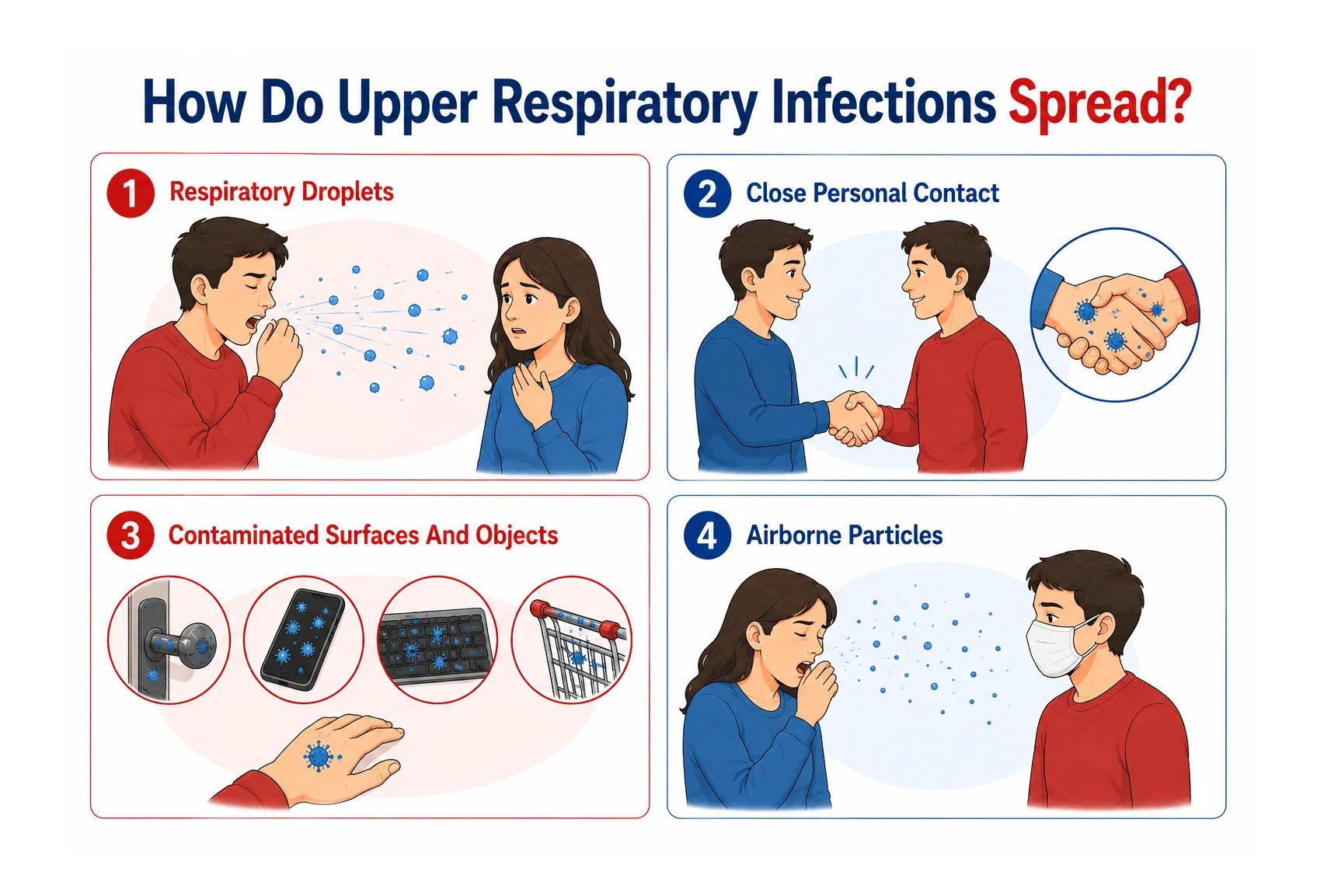
Upper respiratory infections can spread from one person to another, although the risk varies depending on the virus or bacteria causing the infection. If you or someone close to you is sick, it is understandable to worry about passing the illness to others. Knowing the common ways these infections spread can help you take practical steps to protect yourself, your family, and coworkers.
Respiratory Droplets
Respiratory droplets can carry infectious germs when a sick person coughs, sneezes, or talks. These droplets may reach another person's nose, mouth, or eyes, particularly when people are close together. This is one of the important ways many respiratory viruses can spread.
Close Personal Contact
Close contact with an infected person can increase the chance of catching a respiratory infection. Activities such as hugging, kissing, or being in close face-to-face contact can expose you to respiratory secretions. Direct contact can also transfer germs between people through their hands.
Contaminated Surfaces and Objects
Some respiratory viruses can remain on frequently touched objects and surfaces for a period of time. Touching a contaminated doorknob, phone, desk, or other object and then touching your eyes, nose, or mouth can provide a route for infection. Good hand hygiene can reduce this risk.
Airborne Particles
Some respiratory viruses can also spread through very small particles that remain suspended in the air, particularly in enclosed or poorly ventilated spaces. Breathing in these particles can lead to infection, and the risk may increase with prolonged indoor exposure. The importance of this route varies among different respiratory viruses.
How Long Is An Upper Respiratory Infection Contagious?
The contagious period of an upper respiratory infection depends on the cause and your overall health. Most viral URIs are more contagious early in the illness, but some infections can spread even after symptoms begin to improve. Taking precautions while sick can help protect people around you.
- Before Symptoms Start: Some respiratory viruses can spread before symptoms appear, so you may infect others without knowing you are sick.
- First Few Days Of Symptoms: Most viral URIs are most contagious during the first few days, when symptoms such as coughing, sneezing, and a runny nose are often strongest.
- About One Week After Symptoms Begin: Contagiousness usually decreases as symptoms improve. However, infections such as flu can remain contagious for about 5–7 days after symptoms begin.
- Up To Two Weeks Or Longer: Some cold viruses may remain contagious for up to two weeks, especially when symptoms continue. Children and people with weakened immune systems may spread infections longer.
What Causes An Upper Respiratory Infection?
If you develop a runny nose, sore throat, cough, or congestion, you may wonder what caused your illness. Upper respiratory infections occur when germs infect the nose, throat, sinuses, or upper airways. Most are caused by viruses, while some result from bacteria.
- Viruses: Rhinovirus, influenza, RSV, and adenovirus cause most upper respiratory infections.
- Bacteria: Bacteria can cause infections such as strep throat and some cases of bacterial sinusitis.
- Close Contact: Being around someone with a respiratory infection increases your exposure to infectious germs.
- Crowded Places: Schools, offices, public transportation, and other crowded areas can increase exposure to respiratory infections.
- Weakened Immunity: A weakened immune system can make it harder for your body to fight infections.
Dangerous Upper Respiratory Infection Symptoms
Most upper respiratory infections improve on their own, but some symptoms can signal a serious complication. Seek medical care promptly if symptoms become severe or suddenly worsen.
- Trouble breathing or severe shortness of breath.
- Persistent or severe chest pain.
- Blue, gray, or pale lips or face.
- New confusion or difficulty staying awake.
- Severe dehydration or inability to keep fluids down.
How Long Should An Upper Respiratory Infection Last?
Most uncomplicated upper respiratory infections improve within about 7–10 days, although symptoms such as a cough or stuffy nose can sometimes last up to 10–14 days. Symptoms that last longer than 10 days without improvement, or improve and then become worse, should be evaluated by a healthcare professional.
When To Go To The ER
Most upper respiratory infections improve with home care, but certain changes can require emergency evaluation. Go to the ER if you notice:
- Symptoms suddenly become much worse.
- A high fever that does not improve with medication.
- Severe weakness, dizziness, or inability to stand.
- Coughing up blood.
- Severe headache with a stiff neck.
Upper Respiratory Infection Care at Memorial Springs ER
When an upper respiratory infection causes severe breathing problems, chest pain, dehydration, or rapidly worsening symptoms, Memorial Springs ER in Spring, Texas, is available 24/7 for prompt emergency care. With ER wait times under 12 minutes, our board-certified physicians can quickly evaluate severe respiratory symptoms and provide appropriate treatment and diagnostic support. Do not wait for serious symptoms to worsen, visit Memorial Springs ER when emergency care is needed.
Key Takeaways
- Upper respiratory infections are usually contagious, especially when caused by viruses.
- Symptoms often spread through close contact, respiratory particles, and contaminated surfaces.
- Most URIs are most contagious during the first few days of illness.
- Severe breathing problems, chest pain, confusion, or dehydration require prompt medical attention.
- Seek emergency care if symptoms suddenly worsen or become difficult to manage at home.