

Is Rhinovirus Contagious?

When a runny nose, nonstop sneezing, or a scratchy throat suddenly takes over your day, it is natural to wonder whether you could pass rhinovirus to someone you love. The good news is that most infections are mild, but they can spread easily from person to person.
Yes, rhinovirus is contagious. It can spread through respiratory secretions and contaminated hands or surfaces, with transmission often highest during the first few days of illness. If symptoms become severe or you develop trouble breathing, an urgent care or emergency room can provide prompt medical evaluation.
What Is Rhinovirus?
Rhinovirus is a highly contagious respiratory virus and one of the most common causes of the common cold. It mainly infects the nose and throat, causing symptoms such as a runny or stuffy nose, sneezing, sore throat, cough, and mild fatigue.
Most rhinovirus infections are mild and improve without specific treatment, but the virus can sometimes worsen asthma or contribute to lower respiratory complications. A PubMed-indexed study found that rhinoviruses were detected in about 50% of common-cold episodes, highlighting their important role in respiratory infections.
Dangerous Rhinovirus Symptoms
- Difficulty Breathing: Shortness of breath or rapid breathing.
- Severe Wheezing: Persistent or worsening wheezing.
- Chest Pain: New or persistent chest pain.
- Bluish Lips Or Face: May indicate low oxygen levels.
- Severe Weakness: Extreme weakness or confusion.
- High Fever: Fever that is severe or persistent.
- Worsening Cough: Severe or rapidly worsening cough.
- Pneumonia Signs: Fever, chest pain, or breathing difficulty.
How Does Rhinovirus Spread?
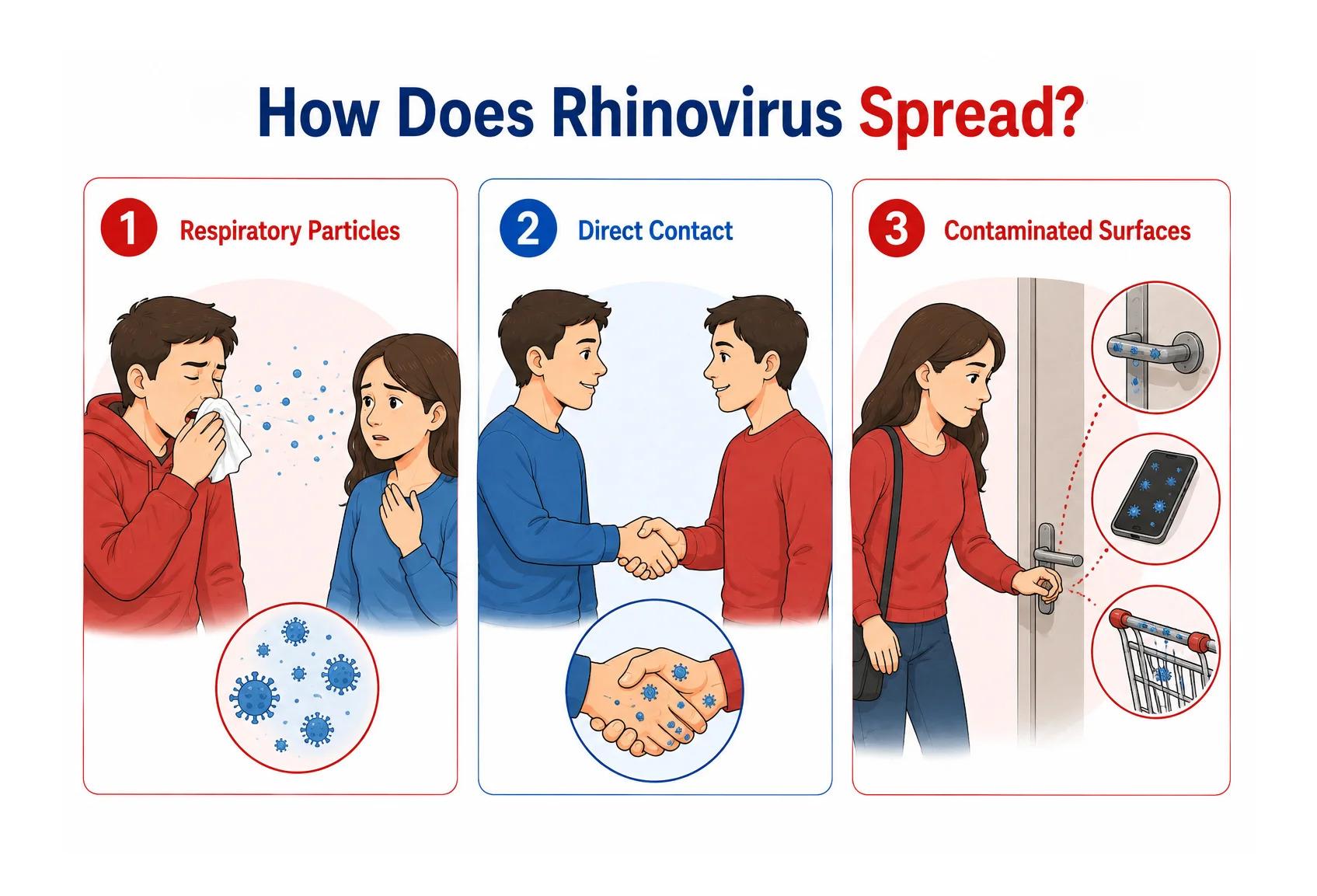
If you are worried about passing rhinovirus to family members, coworkers, or children, it helps to know how exposure happens. Rhinovirus can enter another person’s body through the nose, mouth, or eyes and begin an infection. Transmission is more likely when people are in close contact with someone who is infected, especially during the early days of illness.
Respiratory Particles
Rhinovirus can spread through respiratory particles released when an infected person coughs, sneezes, talks, or breathes. Close contact can increase the chance of inhaling infectious particles. Good ventilation and avoiding close contact when sick can help reduce exposure.
Direct Contact
Direct contact with an infected person can transfer respiratory secretions containing rhinovirus. The virus can reach the nose, mouth, or eyes when contaminated hands touch the face. Frequent handwashing can help lower the risk of transmission.
Contaminated Surfaces
Rhinovirus can remain infectious on contaminated surfaces for a period of time. Touching shared objects and then touching your nose, mouth, or eyes may allow the virus to enter the body. Cleaning frequently touched surfaces and washing your hands can help reduce exposure.
How Long Is Rhinovirus Contagious?
Rhinovirus is generally most contagious during the first 2–3 days after symptoms begin, when the amount of virus in respiratory secretions is often highest. However, people can continue shedding the virus for about 1–2 weeks, particularly children and people with weakened immune systems. Staying home when you feel sick, practicing good hand hygiene, and limiting close contact can help reduce the chance of passing the infection to others.
How Long Does Rhinovirus Last?
For most people, a rhinovirus infection lasts about 7–10 days, although some symptoms, especially a cough or nasal congestion, may linger longer. Symptoms often begin gradually and become most noticeable during the first few days before improving. If symptoms continue to worsen, return after improving, or cause difficulty breathing, chest pain, or severe weakness, seek medical evaluation to rule out complications.
How To Prevent Rhinovirus From Spreading
Rhinovirus can spread easily, especially when you are around others while experiencing cold symptoms. Taking simple precautions can reduce the chance of passing the virus to family members, coworkers, and other people. These habits are especially important around young children, older adults, and people with weakened immune systems.
- Wash Your Hands: Use soap and water frequently, especially after coughing or sneezing.
- Avoid Touching Your Face: Keep unwashed hands away from your eyes, nose, and mouth.
- Cover Coughs And Sneezes: Use a tissue or your elbow when coughing or sneezing.
- Avoid Close Contact: Limit close contact with others while you are sick.
- Clean Shared Surfaces: Disinfect frequently touched objects and surfaces.
- Improve Ventilation: Increase fresh-air circulation in shared indoor spaces.
- Stay Home When Sick: Rest at home when possible to reduce transmission.
When To Go To The ER
Most rhinovirus infections are mild, but severe or worsening symptoms can sometimes signal a serious respiratory complication. Seek emergency medical care if symptoms interfere with breathing, cause significant weakness, or suggest dangerously low oxygen levels. Prompt evaluation is especially important for infants, older adults, and people with underlying heart, lung, or immune conditions.
- Difficulty breathing or severe shortness of breath.
- Bluish or gray lips, face, or fingertips.
- Severe or persistent chest pain or pressure.
- Confusion, fainting, or difficulty staying awake.
- Severe dehydration or inability to keep fluids down.
- Rapidly worsening wheezing or breathing problems.
- High fever with severe or worsening symptoms.
- Symptoms that improve but suddenly become much worse.
Rhinovirus Care At Memorial Springs ER
When rhinovirus symptoms become severe, worsen suddenly, or cause breathing difficulties, Memorial Springs ER in Spring, Texas, is available 24/7, with ER wait times under 12 minutes, for prompt medical evaluation. Our board-certified physicians can assess severe respiratory symptoms, dehydration, wheezing, and other complications to determine the appropriate treatment. If you are experiencing symptoms, do not wait for your condition to worsen; visit Memorial Springs ER for timely emergency care.
Key Takeaways
- Rhinovirus is highly contagious and is a common cause of the common cold.
- It spreads through respiratory particles, direct contact, and contaminated surfaces.
- Rhinovirus is usually most contagious during the first few days of illness.
- Most infections improve within 7–10 days, although coughing or congestion may last longer.
- Seek emergency care for severe breathing problems, chest pain, bluish lips, confusion, or rapidly worsening symptoms.