

What Causes Runny Nose?

A constantly runny nose can be frustrating, especially when you’re reaching for tissues all day or struggling to sleep because of persistent nasal drainage. It’s understandable to wonder why your nose keeps running.
Most cases are temporary, but persistent or severe symptoms may need medical evaluation. If you’re looking for urgent care, prompt care can help when symptoms are worsening or accompanied by concerning signs such as trouble breathing, high fever, severe headache, or significant facial pain.
Top Causes Of Runny Nose
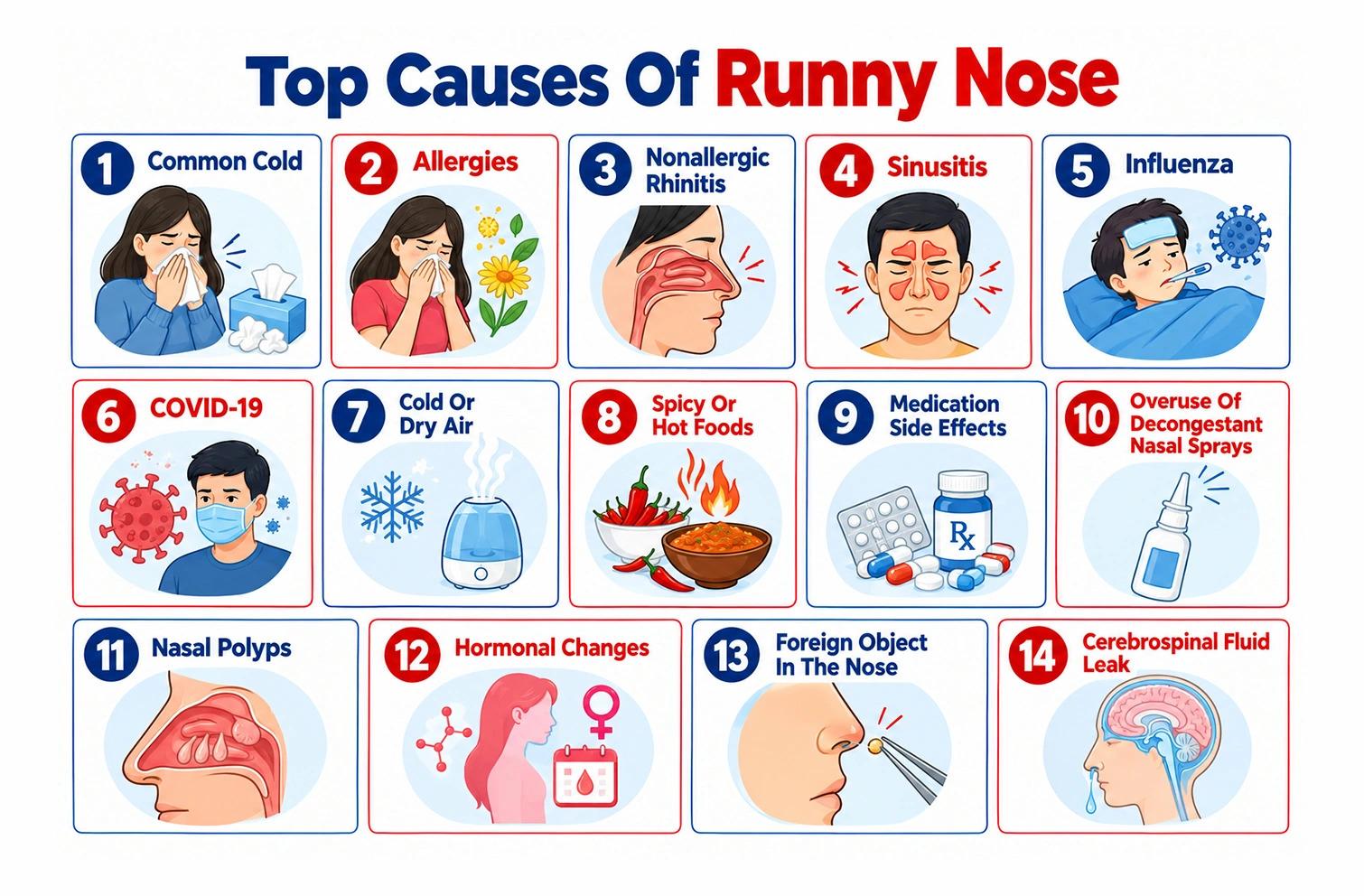
A runny nose can happen when the tissues inside your nose become irritated, inflamed, or produce more mucus than usual. The pattern of drainage, how long it lasts, and other symptoms can provide clues about the underlying cause. Some triggers are temporary and improve on their own, while persistent symptoms may need medical evaluation.
Common Cold
The common cold is one of the most frequent reasons for a runny nose. Viral infections irritate the nasal lining and stimulate increased mucus production, often causing clear or watery drainage at first. You may also have sneezing, nasal congestion, sore throat, cough, or mild fatigue. Symptoms generally improve as the infection resolves.
Allergies
Allergic rhinitis can cause a persistent, watery runny nose after exposure to allergens such as pollen, dust mites, mold, or pet dander. Histamine released during an allergic reaction irritates and inflames the nasal passages. Sneezing, an itchy nose, and itchy or watery eyes commonly occur alongside the drainage.
Nonallergic Rhinitis
Nonallergic rhinitis causes a runny or stuffy nose without an allergic reaction. Triggers can include strong odors, smoke, air pollution, weather changes, or changes in temperature and humidity. Unlike allergies, it typically does not cause itchy eyes, nose, or throat. Symptoms may come and go throughout the year.
Sinusitis
Sinusitis occurs when the tissues lining the sinuses become inflamed, sometimes following a viral infection or in association with allergies. It can cause nasal drainage, congestion, facial pressure or pain, and reduced sense of smell. Thick yellow or green mucus may occur, particularly when inflammation or infection is significant.
Influenza
The flu can trigger a runny or congested nose along with more systemic symptoms than a typical cold. Fever, chills, body aches, headache, fatigue, cough, and sore throat may occur. Nasal symptoms can vary from mild to significant, and sudden onset of several symptoms may help distinguish influenza from other respiratory illnesses.
COVID-19
COVID-19 can cause respiratory symptoms including a runny or stuffy nose, particularly alongside sore throat, cough, fatigue, fever, or headache. Because these symptoms overlap with colds and influenza, nasal drainage alone cannot determine which infection you have. Testing may be appropriate when exposure or other symptoms raise concern.
Cold Or Dry Air
Exposure to cold or dry air can irritate the nasal passages and trigger additional mucus production. Some people notice their nose starts running shortly after going outdoors in cold weather or entering an environment with very dry air. This type of drainage is usually temporary and improves after the nasal passages are no longer exposed to the trigger.
Spicy Or Hot Foods
Eating spicy or very hot foods can cause a runny nose through a response called gustatory rhinitis. Compounds such as capsaicin can stimulate nerves in the nasal passages, leading to increased mucus production. The drainage usually begins while eating or shortly afterward and typically settles once the trigger is gone.
Medication Side Effects
Certain medications can contribute to a runny nose or other forms of nonallergic rhinitis. Examples include some blood pressure medicines, antidepressants, erectile dysfunction medications, and nonsteroidal anti-inflammatory drugs. If symptoms began after starting or changing a medication, discuss the timing with your healthcare provider rather than stopping prescribed medicine on your own.
Overuse Of Decongestant Nasal Sprays
Using topical decongestant nasal sprays for too long can cause rebound nasal symptoms, known as rhinitis medicamentosa. The nose may become increasingly congested and irritated as the medication wears off, encouraging continued use. If you have been relying on a decongestant spray regularly, speak with a healthcare professional about safer long-term treatment options.
Nasal Polyps
Nasal polyps are soft, noncancerous growths that develop in the lining of the nose or sinuses. Larger polyps can interfere with normal drainage and contribute to a persistent runny or stuffy nose. They may also cause postnasal drip, reduced sense of smell, and difficulty breathing through the nose.
Hormonal Changes
Changes in hormone levels can affect blood flow and the tissues lining the nose, sometimes leading to persistent congestion or nasal drainage. This may occur during pregnancy, menstruation, or other hormonal changes. Pregnancy-related rhinitis can continue for weeks, so persistent symptoms should be discussed with a healthcare provider if they become difficult to manage.
Foreign Object In The Nose
A foreign object lodged inside the nose can cause ongoing drainage, particularly in children. One-sided nasal discharge, unpleasant odor, bleeding, or persistent congestion can be important clues. A healthcare professional should evaluate suspected objects rather than having a child attempt to remove a deeply lodged object themselves.
Cerebrospinal Fluid Leak
A cerebrospinal fluid (CSF) leak is a rare but important cause of persistent, clear nasal drainage. It can occur after head trauma or certain surgeries and may produce watery fluid that mainly drains from one side of the nose. Clear drainage after a significant head injury should receive prompt medical evaluation because an untreated CSF leak can increase the risk of serious complications such as meningitis.
Also Read: How To Stop Runny Nose
When To Go To The ER For A Runny Nose
A runny nose usually does not require emergency care, but certain warning signs can indicate a serious infection, severe allergic reaction, breathing problem, or complication requiring immediate evaluation. Do not delay emergency care if nasal drainage occurs with sudden or severe symptoms, especially after an injury.
- Difficulty breathing, shortness of breath, or struggling to breathe.
- Swelling of the lips, tongue, throat, or face.
- Fainting, severe dizziness, confusion, or difficulty staying awake.
- Blue, gray, or pale lips or skin.
- Severe headache, stiff neck, or sudden changes in mental status.
- Clear, watery drainage from one side of the nose after a significant head injury.
- Heavy or persistent nosebleeding that does not stop with appropriate first aid.
- Severe facial swelling or rapidly worsening facial pain with fever.
- Signs of a severe allergic reaction, especially when breathing or swallowing becomes difficult.
- Symptoms that are rapidly worsening or make you feel seriously unwell.
When you or someone you love is feeling seriously ill, getting timely emergency care matters. Our ER wait time is under 12 minutes, helping you get evaluated without unnecessary delays.
How To Stop A Runny Nose
A runny nose can be frustrating, especially when it continues throughout the day or interferes with sleep and daily activities. Relief depends on what is causing the nasal drainage and how severe your symptoms are. Simple measures may help with temporary symptoms, while persistent or worsening drainage may require medical evaluation.
Use Saline Nasal Spray Or Rinse
Saline sprays can moisturize irritated nasal passages and help loosen excess mucus. A saline rinse can also flush out mucus, allergens, and other irritants from the nose. If you use a nasal irrigation device, always use distilled, sterile, or appropriately treated water. These options may be especially helpful when a runny nose occurs with congestion or nasal irritation.
Drink Plenty Of Fluids
Staying hydrated can help keep mucus thinner and easier to clear from your nasal passages. Water and other nonalcoholic fluids are particularly helpful when a runny nose occurs during a respiratory infection. Adequate fluids can also help reduce the risk of dehydration if you have a fever or are not eating normally. Try taking small, frequent sips if drinking large amounts at once is uncomfortable.
Use A Humidifier
Dry air can irritate the nasal lining and make a runny or congested nose feel worse. A cool-mist humidifier can add moisture to the air and may make nasal breathing more comfortable. Clean the humidifier regularly to prevent the growth of mold and bacteria. Avoid excessive humidity because it can encourage mold and dust mites that may worsen allergy symptoms.
Avoid Your Triggers
Reducing exposure to personal triggers can help control a runny nose caused by allergies or nasal irritation. Common triggers include pollen, dust, pet dander, cigarette smoke, strong odors, and sudden temperature changes. Keeping your environment free of smoke and minimizing known allergens may reduce repeated symptoms.
Take Antihistamines For Allergies
Antihistamines can reduce a runny nose, sneezing, and nasal itching when allergies are responsible for the symptoms. They work by blocking histamine, a chemical involved in allergic reactions. Some antihistamines can cause drowsiness, so check the label before driving or operating machinery. A healthcare professional can help you choose an appropriate option based on your symptoms and medications.
Use Decongestants Carefully
Decongestants can temporarily reduce swelling inside the nasal passages and improve nasal congestion. However, they may not be appropriate for people with certain conditions, including uncontrolled high blood pressure or some heart problems. Nasal decongestant sprays should only be used for the recommended short period because prolonged use can cause rebound congestion.
Runny Nose Care At Memorial Springs ER
If you or your loved one has a runny nose with difficulty breathing, facial swelling, severe headache, high fever, or rapidly worsening symptoms, Memorial Springs ER in Spring, Texas, is available 24/7 for emergency evaluation and care. Our experienced emergency team can quickly assess concerning symptoms and provide appropriate treatment.
When serious warning signs occur, do not wait for symptoms to improve on their own. Prompt emergency care is especially important when breathing problems, severe infection, or complications after a head injury are possible. Memorial Springs ER is open 24/7, with patients seen in under 12 minutes, helping you get evaluated quickly when every minute matters.
Key Takeaways
- A runny nose is commonly caused by infections, allergies, irritation, or changes in the environment.
- Saline rinses, adequate fluids, humidified air, and avoiding triggers may help relieve nasal drainage.
- Antihistamines or nasal corticosteroid sprays may help when allergies are responsible.
- Persistent, severe, or one-sided nasal drainage may require medical evaluation to identify the underlying cause.
- Seek emergency care for a runny nose accompanied by breathing difficulty, facial or throat swelling, fainting, severe headache, or clear drainage after a head injury.
Frequently Asked Questions
Why Does My Nose Run When I Eat?
Your nose may run while eating because of gustatory rhinitis, a nonallergic reaction triggered by food. Spicy or hot foods are common triggers, causing nerves in the nose to increase mucus production. The drainage usually begins during or shortly after eating and typically stops once the trigger is gone.
Can Teething Cause A Runny Nose?
Teething itself is not considered a direct cause of a runny nose. Babies may have increased saliva and mild nasal symptoms during teething, but a true runny nose is more often caused by a viral infection or another condition. If your baby has a persistent runny nose, fever, breathing difficulty, or seems unusually unwell, contact a healthcare professional.