

What Is Asthma

Having trouble breathing, experiencing sudden coughing, or feeling tightness in your chest can be alarming. If you are wondering “what is asthma?” and why these symptoms happen, it is important to understand how this condition affects your airways and when breathing problems require medical attention.
Asthma is a chronic respiratory condition that causes inflammation and narrowing of the airways, making it harder for air to move in and out of the lungs. Symptoms can be mild and occasional or severe enough to become a medical emergency. If asthma symptoms suddenly worsen or require immediate attention, our urgent care or emergency room is available to provide prompt assessment and treatment.
What Does Asthma Feel Like?
Asthma can feel like difficulty breathing, chest tightness, wheezing, coughing, or a feeling that you cannot get enough air. Symptoms may worsen after exposure to triggers such as allergens, smoke, cold air, exercise, or respiratory infections.
A PubMed systematic review and meta-analysis of 67 studies involving 57,033 adults with asthma found that wheezing, breathlessness, chest tightness, and cough were among the most common symptoms, with this combination reported in 71.26% of patients across included studies.
Types of Asthma
Asthma varies from person to person based on triggers, airway inflammation, and symptom severity. Identifying the type helps healthcare providers choose the most effective treatment plan.
- Allergic Asthma: Triggered by allergens like pollen, dust mites, mold, pet dander, and cockroach particles. It may occur with allergies such as hay fever or eczema.
- Non-Allergic Asthma: Occurs without allergies and may be triggered by infections, stress, cold air, smoke, odors, or pollution.
- Exercise-Induced Asthma: Causes coughing, wheezing, and chest tightness during or after exercise, especially in cold or dry air.
- Occupational Asthma: Develops from workplace exposure to chemicals, fumes, dust, gases, or other irritants.
- Adult-Onset Asthma: Begins in adulthood and may be linked to allergies, infections, hormones, or environmental factors.
- Childhood Asthma: Often starts early in life and causes recurring cough, wheezing, and breathing problems. Symptoms may improve or continue into adulthood.
- Severe Asthma: A difficult-to-control form that causes frequent flare-ups despite treatment and may require specialized care.
What Causes Asthma?
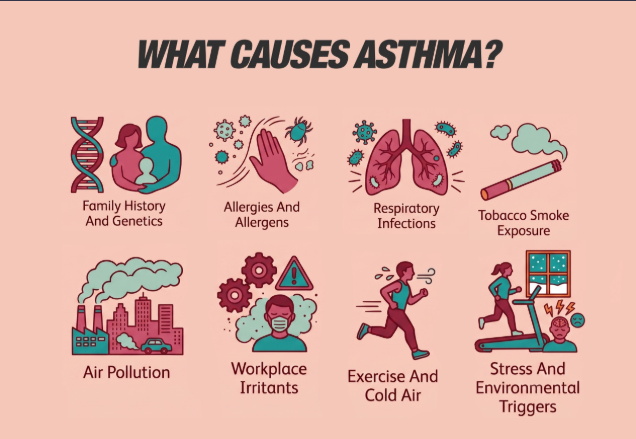
Asthma develops when the airways become overly sensitive and react strongly to certain triggers, causing inflammation and narrowing that can make breathing difficult. For many people, symptoms may appear suddenly or worsen over time, making it important to understand what contributes to asthma development.
Family History and Genetics
A family history of asthma or allergic conditions can increase the likelihood of developing asthma. Certain inherited traits may make the immune system and airways more sensitive to triggers. People with close relatives who have asthma may benefit from monitoring symptoms such as coughing, wheezing, or breathing difficulty.
Allergies and Allergens
Allergens are one of the most common triggers linked to asthma symptoms. Substances such as pollen, dust mites, mold, pet dander, and cockroach particles can cause airway inflammation in sensitive individuals. Reducing exposure to known allergens may help prevent asthma flare-ups.
Respiratory Infections
Viral respiratory infections, including colds, influenza, and RSV, can irritate the airways and trigger asthma symptoms. Repeated infections may increase airway sensitivity, especially in children and people with existing breathing problems. Managing infections early can help reduce the risk of worsening symptoms.
Tobacco Smoke Exposure
Exposure to cigarette smoke, including secondhand smoke, can irritate the lungs and increase asthma risk. Smoke damages airway function, promotes inflammation, and can make asthma symptoms more frequent or severe. Avoiding tobacco exposure is an important step in protecting lung health.
Air Pollution
Polluted air can affect respiratory health and trigger asthma symptoms in sensitive individuals. Vehicle emissions, industrial pollutants, wildfire smoke, and indoor air irritants may increase airway inflammation. Long-term exposure can contribute to more frequent breathing problems.
Workplace Irritants
Some people develop asthma after repeated exposure to substances at work, known as occupational asthma. Chemicals, dust, fumes, cleaning products, and industrial materials can irritate the airways. Symptoms may improve when away from the workplace but return with continued exposure.
Exercise and Cold Air
Physical activity and cold, dry air can trigger asthma symptoms in some individuals. Rapid breathing during exercise may cause airway narrowing, leading to coughing, wheezing, or chest tightness. Proper asthma management allows most people to stay active safely.
Stress and Emotional Triggers
Strong emotions, stress, and anxiety can worsen asthma symptoms by affecting breathing patterns and increasing airway sensitivity. Stress does not directly cause asthma, but it may contribute to flare-ups in people who already have the condition. Managing stress can support better symptom control.
Dangerous Asthma Symptoms You Should Never Ignore
A severe asthma attack can quickly become life-threatening if the airways become severely narrowed and breathing is affected. Seek emergency medical care if symptoms are intense, worsening, or not improving with prescribed asthma medication.
- Severe Shortness of Breath: Difficulty breathing that affects speaking, walking, or daily activities.
- Blue Lips or Fingertips: A warning sign of low oxygen levels.
- Rescue Inhaler Not Working: Symptoms continue or return soon after using medication.
- Severe Chest Tightness: Increasing pressure or discomfort that makes breathing harder.
- Gasping For Air: Struggling to breathe or feeling unable to get enough air.
- Confusion or Extreme Drowsiness: Possible signs of reduced oxygen supply.
- Silent Chest: Little or no wheezing despite severe breathing difficulty.
At Memorial Spring ER, patients experiencing severe asthma symptoms can receive prompt medical evaluation, with an average ER wait time of under 12 minutes to help begin timely care when every minute matters.
How Is Asthma Diagnosed?
Asthma is diagnosed through a review of symptoms, medical history, and breathing tests. Since similar symptoms can occur with other conditions, these evaluations help confirm asthma, identify triggers, and guide the right treatment plan.
- Medical History: Reviews your symptoms, family history, allergies, previous breathing problems, and possible triggers that may worsen asthma.
- Physical Examination: Checks breathing patterns, listens for wheezing or abnormal lung sounds, and evaluates signs linked to asthma or allergies.
- Spirometry Test: Measures how much air you can breathe in and out and how quickly you can exhale to identify airway narrowing.
- Bronchodilator Response Test: Compares breathing before and after using a bronchodilator to see if airway function improves with medication.
- Peak Flow Measurement: Uses a peak flow meter to monitor how well air moves out of the lungs and track changes in asthma control.
- FeNO Test: Measures nitric oxide levels in exhaled breath to detect airway inflammation commonly associated with asthma.
- Allergy Testing: Identifies specific allergens, such as pollen, dust, or pet dander, that may trigger or worsen asthma symptoms.
When to Go to the ER
An asthma attack can worsen quickly when the airways become severely restricted. Seek emergency care if breathing problems are severe, symptoms are getting worse, or your rescue inhaler is not providing enough relief.
- Severe Breathing Difficulty: Trouble breathing that continues or rapidly worsens.
- Unable To Speak Clearly: Shortness of breath prevents completing full sentences.
- Inhaler Not Providing Relief: Symptoms do not improve after using prescribed medication.
- Blue Lips, Face, Or Fingertips: May indicate dangerously low oxygen levels.
- Severe Wheezing Or Chest Tightness: Breathing symptoms become intense or persistent.
- Confusion Or Fainting: Possible signs of a serious asthma emergency.
- Worsening Symptoms: Condition continues to decline despite treatment.
Asthma Treatment
Asthma treatment focuses on controlling symptoms, reducing airway inflammation, and preventing future flare-ups. The right approach depends on asthma severity, symptoms, triggers, and how well the condition responds to medication.
- Quick-Relief Inhalers: Albuterol helps quickly relax airway muscles during sudden asthma symptoms but does not replace long-term control treatment.
- Inhaled Corticosteroids: Medications like budesonide and fluticasone reduce airway inflammation and help prevent attacks.
- Combination Inhalers: Combine corticosteroids with long-acting bronchodilators to improve asthma control.
- Leukotriene Modifiers: Medicines such as montelukast may help reduce inflammation, especially with allergy-related asthma.
- Allergy Treatment: Antihistamines, nasal sprays, or allergy shots may help when allergens trigger symptoms.
- Biologic Therapy: Used for severe asthma to target specific inflammation pathways and reduce frequent attacks.
- Trigger Avoidance: Limiting exposure to smoke, pollen, dust, mold, and pet dander can lower flare-up risk.
- Breathing Exercises: Techniques and pulmonary rehabilitation may support better breathing control.
- Supportive Home Care: Staying hydrated, avoiding smoke, and following an asthma action plan can help manage symptoms.
Get Asthma Treatment at Memorial Springs ER
Breathing problems can become serious quickly, especially when asthma symptoms worsen or your rescue inhaler is not providing relief. If you experience severe wheezing, chest tightness, coughing, or shortness of breath, prompt medical evaluation can help prevent complications.
At Memorial Springs ER, our emergency care team provides evaluation and treatment for asthma attacks and other breathing emergencies. From oxygen support and breathing treatments to rapid assessment and personalized care, we help stabilize symptoms and support a safer recovery.
Frequently Asked Questions
Is Asthma Genetic?
Yes, asthma can be influenced by genetics. Having a family history of asthma, allergies, or eczema may increase your risk, but environmental triggers also contribute to its development.
Can Asthma Go Away?
Asthma does not usually go away completely, but symptoms may improve or become less frequent over time. In some cases, symptoms can return later in life.
Can You Die From An Asthma Attack?
Yes, a severe asthma attack can be life-threatening without quick treatment. Seek emergency care for severe breathing difficulty, trouble speaking, blue lips or fingertips, or if your inhaler does not help.
Is Asthma an Autoimmune Disease?
No, asthma is not an autoimmune disease. It is a chronic inflammatory condition where the immune system reacts strongly to triggers, causing airway swelling and narrowing.
Related Emergency Services
Related Articles
Trusted Health Resources
The medical information in this article is informed by guidelines from these authoritative organizations:
Medical Disclaimer
The information provided on this blog is for general informational and educational purposes only. It is not a substitute for professional medical advice, diagnosis, or treatment. Always seek the advice of a qualified healthcare provider regarding any medical condition. If you are experiencing a life-threatening medical emergency, call 911 or proceed immediately to the nearest emergency room.