

How Long Does A Sore Throat Last?

If you are dealing with a sore, scratchy, or painful throat, it can make swallowing, eating, and even talking uncomfortable. A sore throat usually improves within a few days to about a week, but the exact duration depends on what is causing it.
Viral infections often clear on their own, while strep throat and other bacterial infections may require treatment. If your throat pain is severe, getting worse, or making it difficult to swallow or breathe, seek prompt medical attention through urgent care, as these symptoms can sometimes indicate a more serious infection or complication.
What Is A Sore Throat?
A sore throat is pain, irritation, or discomfort in the throat that can make swallowing, eating, drinking, or speaking uncomfortable. It may feel scratchy, dry, burning, swollen, or tender, and the severity can vary from mild irritation to significant pain.
A sore throat is common and usually improves as the underlying condition resolves. A systematic review found a pooled incidence of 82.2 sore throat episodes per 100 child-years among children, highlighting how frequently this symptom occurs.
Dangerous Sore Throat Symptoms
- Difficulty breathing or a feeling that your throat is closing.
- Inability to swallow liquids or saliva.
- Drooling because swallowing is too painful or difficult.
- Severe swelling of the throat, tongue, jaw, or neck.
- Severe or rapidly worsening throat pain, especially on one side.
- Difficulty opening your mouth.
- A muffled or significantly changed voice.
- High fever with severe throat pain or worsening symptoms.
- Swelling or tenderness in the neck with difficulty swallowing or breathing.
- Blood in your saliva or coughing up blood.
- Severe weakness, confusion, or signs of dehydration.
- A sore throat that is not improving or continues to worsen after several days.
How Long Does A Sore Throat Usually Last?
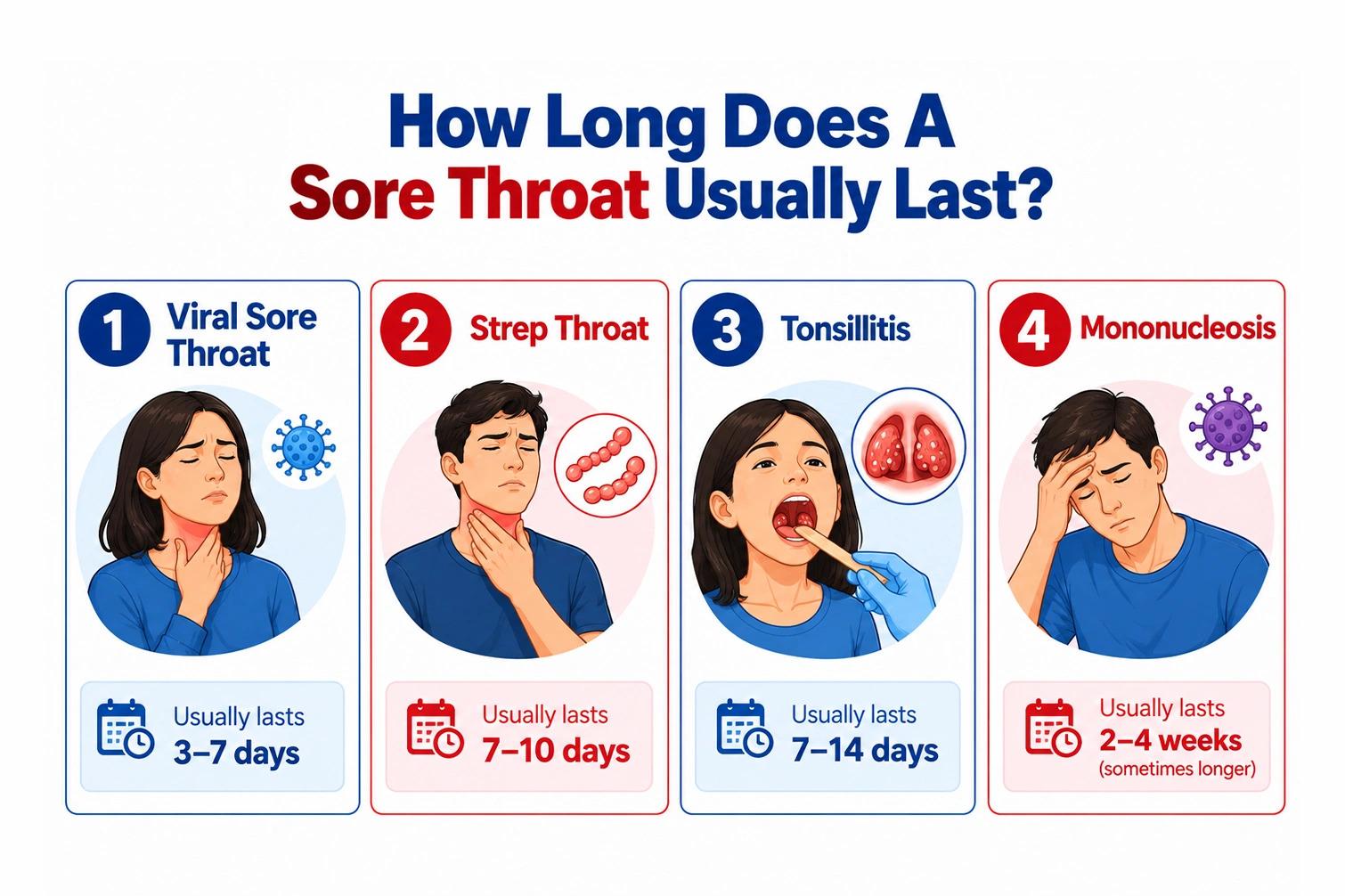
If you are dealing with throat pain, it can be frustrating not knowing when swallowing and speaking will start to feel normal again. The recovery time varies depending on the type of sore throat and how your body responds. Knowing the typical timeline can help you recognize whether your symptoms are improving normally or need medical attention.
Viral Sore Throat
A viral sore throat is the most common type and often occurs with cold or flu symptoms such as cough, congestion, or a runny nose. Most viral sore throats improve within 3 to 10 days, although some may resolve sooner. Symptoms that persist beyond this period or become increasingly severe should be evaluated by a healthcare professional.
Strep Throat
Strep throat is a bacterial infection that can cause sudden throat pain, painful swallowing, fever, and swollen or red tonsils. With appropriate antibiotic treatment, symptoms commonly begin improving within 2 to 3 days. Completing the prescribed antibiotic course is important even when you start feeling better.
Tonsillitis
Tonsillitis causes inflammation and swelling of the tonsils and may make swallowing particularly painful. The recovery time varies depending on whether the condition is caused by a virus or bacteria. Many cases improve within 3 to 4 days, although symptoms can sometimes last longer and require medical evaluation.
Mononucleosis
Mononucleosis can cause a severe sore throat along with swollen lymph nodes, fever, enlarged tonsils, and pronounced fatigue. Unlike an uncomplicated sore throat, recovery can take considerably longer. Most people recover from mononucleosis within 2 to 4 weeks, although fatigue may continue after the throat symptoms improve.
When To Go To The ER For A Sore Throat?
Most sore throats do not require emergency care, but some warning signs can indicate a serious infection, significant throat swelling, or an airway problem. Go to the ER if your throat symptoms suddenly become severe or interfere with breathing, swallowing, or staying hydrated. These situations need prompt assessment because airway complications can become serious quickly.
- Trouble breathing or noisy breathing.
- Inability to swallow saliva or liquids.
- Drooling because you cannot swallow normally.
- Rapid swelling of the throat, tongue, neck, or face.
- A muffled or significantly changed voice.
- Inability to open your mouth normally.
- Feeling that your airway is becoming blocked.
- Severe dehydration because you cannot keep fluids down.
- Rapidly worsening throat or neck swelling.
- Confusion, extreme weakness, or difficulty staying awake.
When you are worried about severe throat symptoms, getting evaluated quickly can provide reassurance and appropriate treatment when needed. At Memorial Springs ER, ER wait times are under 12 minutes, so you can receive prompt attention when an emergency needs to be assessed.
What Factors Can Make A Sore Throat Last Longer?
Most sore throats improve within several days, but some may last longer than expected. If your throat pain continues without improvement, keeps returning, or becomes more uncomfortable, something may be delaying recovery. Knowing what can prolong symptoms can help you decide when to seek medical care.
- Viral Infection: Some viruses take longer to clear, so throat irritation may continue while your body fights the infection.
- Bacterial Infection: Untreated bacterial infections can cause persistent or worsening throat pain and may require appropriate treatment.
- Postnasal Drip: Mucus draining into the throat can cause ongoing irritation and frequent throat clearing.
- Allergies: Continued exposure to allergens can keep the throat inflamed, dry, and irritated.
- Dehydration: Not drinking enough fluids can dry the throat and make soreness more uncomfortable.
- Dry Air: Low humidity can dry and irritate throat tissues, especially during sleep.
- Smoking Or Secondhand Smoke: Smoke can further irritate an already sore throat and slow recovery.
- Acid Reflux: Stomach acid can repeatedly irritate the throat and cause lingering soreness or burning.
- Voice Strain: Excessive talking, shouting, or singing can worsen irritation and delay recovery.
- Weakened Immune System: Reduced immune function can make it harder for the body to clear infections quickly.
How To Get Rid Of Sore Throat?
A sore throat can make swallowing, eating, drinking, and talking uncomfortable, especially when symptoms are persistent. Most sore throats improve within about a week, and simple care can help ease discomfort while your body recovers. The right approach depends on what is causing the soreness and how severe your symptoms are.
Drink Plenty Of Fluids
Staying hydrated keeps the throat moist and may make swallowing more comfortable. Choose water, warm drinks, broth, or other fluids that feel soothing. Avoid drinks that may worsen dryness or irritation.
Gargle With Salt Water
Gargling with warm salt water can help soothe throat irritation and reduce discomfort. Mix about ½ teaspoon of salt into a glass of warm water, gargle, and spit it out. This option is generally simple and inexpensive for older children and adults.
Use Throat Lozenges Or Ice Chips
Lozenges, ice chips, and popsicles can soothe an irritated throat and provide temporary pain relief. Lozenges should not be given to young children because of the choking risk. Follow package directions when using medicated throat products.
Try Over-The-Counter Pain Relief
Over-the-counter medicines such as acetaminophen or ibuprofen may help reduce sore throat pain and fever when appropriate for you. Always follow the label directions and check with a healthcare professional if you take other medicines or have conditions that affect their safe use.
Get Plenty Of Rest
Rest gives your body time to recover, particularly when a sore throat occurs with a viral illness. Getting enough sleep and resting your voice can also reduce additional throat irritation. Avoid strenuous activity until you begin feeling better.
Sore Throat Care At Memorial Springs ER
If you or your loved one is experiencing a severe sore throat with worsening symptoms, difficulty breathing, trouble swallowing, or signs of dehydration, Memorial Springs ER in Spring, Texas, is available 24/7 for emergency evaluation and care. Our emergency team can quickly assess serious throat problems and provide appropriate treatment when prompt medical attention is needed.
When a sore throat becomes severe or suddenly worsens, do not wait for symptoms to improve on their own. Getting timely medical care can be especially important when breathing, swallowing, or hydration is affected. Memorial Springs ER is open 24/7, with patients seen in under 12 minutes, helping you get evaluated quickly when you are concerned about your symptoms.
Key Takeaways
- Most sore throats improve within several days to about a week.
- Viral infections are a common cause and often improve without antibiotics.
- Staying hydrated and using simple symptom-relief measures can ease discomfort.
- Persistent or worsening throat pain may require medical evaluation.
- Severe breathing, swallowing, or airway problems require immediate emergency care.
- Memorial Springs ER is available 24/7, with patients seen in under 12 minutes.
Frequently Asked Questions About Sore Throat
What Is The Best Tea For A Sore Throat?
Warm tea can soothe an irritated throat and provide helpful fluids. Herbal teas such as chamomile or ginger tea may feel comforting, especially when combined with honey.
Can Allergies Cause Sore Throat?
Yes, allergies can cause a sore throat when postnasal drip irritates the throat. Ongoing exposure to allergens can also cause dryness, inflammation, and throat discomfort.
What Causes Sore Throat?
Sore throat can result from viral or bacterial infections, allergies, postnasal drip, acid reflux, dry air, or throat irritation. The cause can affect how long symptoms last and what treatment is appropriate.
What Are The Best Home Remedies For Sore Throat?
Home remedies can help relieve discomfort while your throat recovers. Drinking fluids, gargling with warm salt water, using throat lozenges, resting, and drinking warm beverages may provide relief.