

How Long Does Food Poisoning Last

Few illnesses disrupt your day as quickly as food poisoning. Symptoms such as nausea, vomiting, diarrhea, stomach cramps, and weakness can develop within hours of eating contaminated food, leaving many people wondering how long recovery will take. The answer depends on the type of bacteria, virus, parasite, or toxin responsible, as each affects the body differently and follows its own recovery timeline.
Most people recover within one to three days with adequate rest and hydration. However, some foodborne infections last longer and can lead to serious complications, including severe dehydration, kidney problems, or bloodstream infections. If symptoms become severe or do not improve, seeking care at our urgent care or emergency room can help ensure timely evaluation and treatment.
How Long Does Food Poisoning Last by Type?
The length of food poisoning varies based on the organism causing the infection, the amount of contaminated food consumed, and your overall health. While viral illnesses often resolve within a few days, certain bacterial infections may persist for a week or longer and require medical treatment.
- Norovirus: Symptoms usually begin 12 to 48 hours after exposure and commonly improve within 1 to 3 days. This highly contagious virus often causes sudden vomiting, watery diarrhea, nausea, stomach cramps, and fatigue.
- Salmonella: Symptoms generally develop 6 hours to 6 days after eating contaminated food and may last 4 to 7 days. People commonly experience diarrhea, fever, abdominal cramps, nausea, and vomiting. Severe infections can cause dehydration or spread beyond the intestines.
- E. coli: Symptoms typically appear 3 to 4 days after exposure and may continue for 5 to 10 days. Some strains can cause bloody diarrhea and increase the risk of hemolytic uremic syndrome (HUS), particularly in young children and older adults.
- Campylobacter: Symptoms usually begin 2 to 5 days after infection and often last about one week. Although diarrhea and abdominal pain usually improve, some individuals continue experiencing fatigue or loose stools for several weeks.
- Staphylococcal toxins: These toxins produce symptoms quickly, often within 30 minutes to 8 hours after eating contaminated food. Vomiting is usually the most prominent symptom, and most people recover within 24 hours once the toxin passes through the digestive system.
- Listeria: Unlike many foodborne illnesses, Listeria can take several days or even weeks before symptoms appear. It poses the greatest risk to pregnant women, older adults, newborns, and people with weakened immune systems, making prompt medical evaluation especially important.
According to the Centers for Disease Control and Prevention (CDC), foodborne illnesses affect approximately 48 million Americans each year, resulting in about 128,000 hospitalizations annually. Although most cases improve without medical treatment, severe infections can rapidly become medical emergencies, especially when dehydration or complications develop.
Dangerous Symptoms of Food Poisoning
Food poisoning symptoms can range from mild stomach discomfort to severe illness requiring emergency care. The type of contaminated food, the organism involved, and your overall health all influence which symptoms develop and how severe they become. Symptoms often appear suddenly and may worsen over several hours.
- Nausea and vomiting that begin shortly after eating contaminated food and may make it difficult to keep fluids down.
- Watery or bloody diarrhea, which can increase the risk of dehydration if it is frequent or severe.
- Stomach cramps and abdominal pain that may be sharp, persistent, or occur in waves as the digestive tract becomes inflamed.
- Fever and chills, which are more common with certain bacterial infections and may indicate the body's immune response to the infection.
- Headache, muscle aches, fatigue, and weakness, especially when vomiting and diarrhea cause fluid and electrolyte loss.
- Signs of dehydration, including excessive thirst, dry mouth, dizziness, dark-colored urine, rapid heartbeat, reduced urination, confusion, or fainting.
Food Poisoning vs Stomach Flu: What Is the Difference?
Food poisoning and viral gastroenteritis (commonly called the stomach flu) share many of the same symptoms, making them difficult to distinguish without considering how the illness began. Knowing the differences can help you better understand the likely cause and determine when medical evaluation is appropriate.
- Onset: Food poisoning usually develops within a few hours after eating contaminated food or drinking contaminated beverages. In contrast, the stomach flu often appears 24 to 48 hours after exposure to an infected person.
- Cause: Food poisoning results from consuming food or water contaminated with bacteria, viruses, parasites, or toxins. The stomach flu is most often caused by viruses such as norovirus or rotavirus that spread through close contact with infected individuals or contaminated surfaces.
- Symptoms: Both conditions commonly cause nausea, vomiting, diarrhea, stomach cramps, and fever. However, food poisoning is more likely to cause sudden, intense symptoms after a specific meal, while viral gastroenteritis usually develops more gradually and may include generalized body aches and fatigue.
- Contagiousness: Most cases of food poisoning are not spread directly from person to person, although certain infectious organisms can be transmitted through poor hygiene. Viral gastroenteritis is highly contagious and can spread rapidly within households, schools, workplaces, and long-term care facilities.
- Duration: Both illnesses often improve within a few days. However, bacterial food poisoning may last longer and carries a greater risk of complications such as severe dehydration or bloodstream infection, making timely medical evaluation important if symptoms become severe or fail to improve.
What Factors Affect How Long Food Poisoning Lasts?
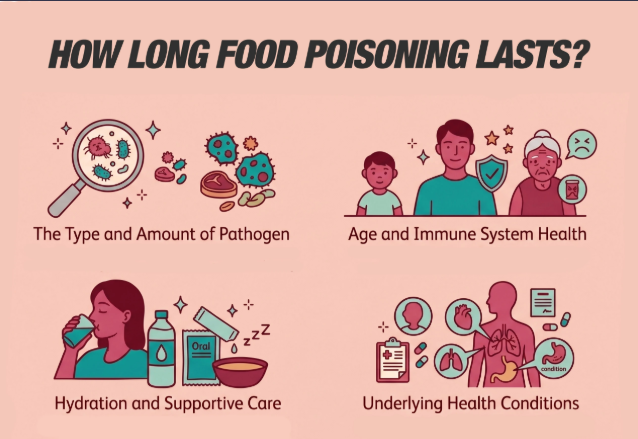
Recovery from food poisoning is different for everyone. While many people feel better within a few days, others may experience symptoms for a week or longer. Several factors influence how quickly your body clears the infection and returns to normal.
The Type and Amount of Pathogen
The organism responsible for food poisoning plays the biggest role in determining how long symptoms last. Viral infections, such as norovirus, usually resolve more quickly than bacterial infections like Salmonella, Campylobacter, or certain strains of E. coli. Consuming a larger amount of contaminated food may also expose you to more bacteria or toxins, increasing symptom severity and prolonging recovery.
Age and Immune System Health
Young children, older adults, pregnant women, and individuals with weakened immune systems are more likely to experience severe symptoms and a longer recovery period. Their immune systems may have greater difficulty fighting foodborne pathogens, increasing the risk of dehydration, hospitalization, and complications.
Hydration and Supportive Care
Replacing lost fluids and electrolytes is one of the most important parts of recovering from food poisoning. Frequent vomiting and diarrhea can quickly lead to dehydration, slowing the body's ability to heal. Drinking oral rehydration solutions, resting, and gradually resuming a bland diet can support recovery.
Underlying Health Conditions
People with chronic conditions, such as diabetes, kidney disease, or liver disease, may take longer to recover from food poisoning. These conditions can make it harder to fight infection and increase the risk of dehydration or other complications. If symptoms are severe or do not improve within a few days, seek prompt medical evaluation.
How to Recover From Food Poisoning Faster?
Most mild cases of food poisoning improve with supportive care at home. While there is no instant cure, taking the right steps early can help reduce symptoms, prevent dehydration, and support your body's natural recovery process.
- Stay hydrated by taking small, frequent sips of water, oral rehydration solutions, or clear broths to replace lost fluids and electrolytes.
- Resume eating gradually once vomiting improves by choosing bland foods such as bananas, rice, applesauce, toast, plain crackers, and boiled potatoes that are gentle on the stomach.
- Avoid foods and drinks that may worsen symptoms, including dairy products, fried or greasy foods, spicy meals, alcohol, caffeinated beverages, and sugary drinks until you have fully recovered.
- Get plenty of rest, as your immune system needs energy to fight the infection and repair your digestive tract.
- Practice good hygiene by washing your hands thoroughly after using the restroom and before preparing food to reduce the risk of spreading infectious organisms to others.
- Take medications only as directed by a healthcare provider. Anti-diarrheal medications are not appropriate for every type of food poisoning and may delay the elimination of certain bacteria from the body.
When to Go to the ER?
Most cases of food poisoning can be managed at home with rest and hydration. However, emergency care is necessary when symptoms become severe, dehydration develops, or complications are suspected. Delaying treatment may increase the risk of serious health problems.
- Bloody diarrhea or repeated bloody vomiting.
- Severe abdominal pain that is constant or worsening.
- A fever above 102°F (38.9°C) that does not improve with appropriate treatment.
- Inability to keep fluids down for more than 12 hours due to persistent vomiting.
- Little or no urine output for 8 hours or longer, or other signs of severe dehydration.
- Confusion, difficulty staying awake, rapid heartbeat, fainting, or symptoms of shock.
- Diarrhea that continues for several days without improvement or becomes progressively worse.
- Symptoms occurring after eating high-risk foods, such as raw seafood, undercooked meat, unpasteurized dairy products, or improperly canned foods, especially if accompanied by severe symptoms.
At Memorial Spring ER, patients experiencing severe food poisoning symptoms can receive prompt medical attention, with an average ER wait time of under 12 minutes for evaluation and treatment.
Food Poisoning Care at Memorial Springs ER
While many people recover from food poisoning at home, some infections require prompt emergency evaluation to prevent dehydration and other serious complications. Persistent vomiting, severe diarrhea, high fever, bloody stools, or signs of dehydration should never be ignored.
At Memorial Springs ER, our experienced emergency team provides comprehensive evaluation and treatment for foodborne illnesses 24 hours a day. Depending on your condition, your care may include diagnostic blood work, electrolyte testing, IV fluid replacement, medications to control nausea and vomiting, and continuous monitoring to ensure you receive timely treatment.
Key Takeaways
- Most food poisoning cases resolve within 1 to 3 days, but some bacterial infections may last longer.
- Common symptoms include nausea, vomiting, diarrhea, stomach cramps, fever, and dehydration.
- Rest, hydration, and a bland diet help most people recover at home.
- Seek emergency care for bloody diarrhea, persistent vomiting, severe dehydration, high fever, or worsening symptoms.
- Young children, older adults, pregnant women, and people with weakened immune systems should seek prompt medical evaluation if symptoms are severe or persistent.
Related Emergency Services
Emergency Care
State-licensed emergency department fully equipped to handle critical, life-threatening medical conditions 24/7/365.
Abdominal Pain
Immediate diagnostic testing and targeted abdominal pain treatment for acute, severe, or persistent stomach and abdominal pain.
Lab Services
On-site full-service laboratory providing rapid blood panels, toxicologies, infection testing, and comprehensive lab diagnostic services.
Related Articles
Trusted Health Resources
The medical information in this article is informed by guidelines from these authoritative organizations:
Medical Disclaimer
The information provided on this blog is for general informational and educational purposes only. It is not a substitute for professional medical advice, diagnosis, or treatment. Always seek the advice of a qualified healthcare provider regarding any medical condition. If you are experiencing a life-threatening medical emergency, call 911 or proceed immediately to the nearest emergency room.